Win Update KB5083631 Windows 11 Cumulative Update Preview build 26100.8328 (24H2) and 26200.8328 (25H2) - April 30


UPDATE 5/12:


 Microsoft Support:

April 30, 2026 - KB5083631 (OS Builds 26200.8328 and 26100.8328) Preview​

This non-security update for Windows 11, version 25H2 and 24H2 (KB5083631), includes production-quality improvements. To learn more about differences between security updates, optional non-security preview updates, out-of-band (OOB) updates, and continuous innovation, see Windows monthly updates explained. For information on Windows update terminology, see the different types of Windows software updates.

To view the latest updates for this release, go to Windows release health dashboard or the update history page for Windows 11, version 24H2 and version 25H2.

Announcements and messages

This section provides key notifications related to this release, including announcements, change logs, and end-of-support notices.

Windows Secure Boot certificate expiration​

Important: Secure Boot certificates used by most Windows devices are set to expire starting in June 2026. This might affect the ability of certain personal and business devices to boot securely if not updated in time. To avoid disruption, we recommend reviewing the guidance and taking action to update certificates in advance. For details and preparation steps, see Windows Secure Boot certificate expiration and CA updates.


Highlights

This update is available through two release phases: gradual rollout and normal rollout. A gradual rollout delivers an update in phases, so features reach devices over time instead of all at once, meaning availability varies by device. A normal rollout is the broad release to all eligible devices at the same time, usually when it reaches general availability (GA).

Gradual rollout

The following summary outlines features from AI-powered Windows 11 PC experiences, along with improvements and fixes. The bold text within the brackets indicates the item or area of the change.

Windows 11 PC experiences​

This section highlights some new features and enhancements for Windows 11 PCs, including AI-powered capabilities, continuous innovation, and performance improvements.
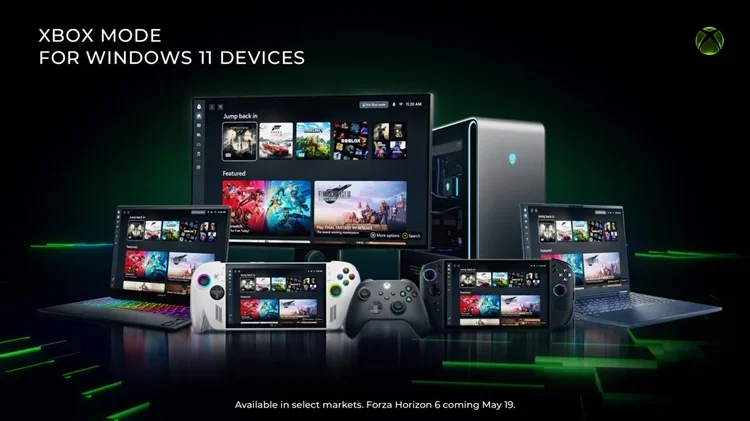
  • [Gaming] New! Xbox mode is now available on Windows 11 PCs, including laptops, desktops, and tablets. Inspired by the Xbox console experience, Xbox mode offers a streamlined, full‑screen interface that puts your games front and center while minimizing background distractions. Xbox mode is designed for those moments when you want to lean back, pick up a controller, and focus on the game. Enter Xbox mode from the Xbox app, Game Bar settings, or by pressing Windows logo key + F11. For more information, see Full screen experience expands to more Windows 11 PC form factors.

  • [File Explorer]
    • New! This update expands the list of archive formats that can be used in File Explorer to include uu, cpio, xar, and NuGet Packages (nupkg).

    • With this update, View and Sort preferences are preserved in folders such as Downloads and Documents when apps launch File Explorer directly to those locations.

    • This update removes a white flash that could appear when opening This PC or while resizing the Details pane in dark mode.
    • This update improves the reliability of relevant explorer.exe processes so they stop after closing File Explorer windows.
  • [Input]
    • New! You can feel haptic feedback effects on compatible input devices when performing certain actions, such as aligning objects in PowerPoint, snapping or resizing windows. These haptic signals can be turned on or off in Settings > Bluetooth & devices > Mouse, Touchpad, or Pen > Haptic signals. This experience is supported on Surface Slim Pen 2, ASUS Pen 3.0, and MSI Pen 2 with haptic feedback. Support for additional compatible devices, including select mice such as Logitech MX Master 4, might become available as hardware partners release updates.

    • New! Voice typing on the touch keyboard now looks simpler and more intuitive. The updated design removes the full‑screen overlay and shows voice typing animations directly on the dictation key, helping you stay focused without extra visual distractions.

    • New! The Arabic 101 Legacy keyboard layout is now available. You can add it when selecting a keyboard for Arabic under Time & Language > Language & Region. This option is for those who prefer the keyboard design used before recent changes with AltGr.

    • This update improves the reliability of setting custom tools under Settings > Bluetooth & Devices > Wheel.
    • This update improves the persistence of Fluid Dictation setting in voice typing.
    • This update improves the reliability of keyboard navigation for emoji panels (Windows logo key + Period).
    • This update improves the reliability of typing when using the ADLaM keyboard.
  • [Sharing] New! Drag Tray is now called Drop Tray. Its settings are now under Settings > System > Multitasking (previously Nearby sharing). Drop Tray uses a smaller peek view. This improvement helps prevent the Drop Tray from opening unintentionally and makes it easier to dismiss when you work near the top of the screen.

  • [Introducing Agents on Taskbar] New! Windows is adding a new way to monitor your agents from the taskbar. This experience supports agents across first- and third-party apps, with Researcher in the Microsoft 365 Copilot app as the first adopter. When Researcher works on a report, Windows shows progress on the taskbar so you can check updates at a glance. Hover over the Microsoft 365 Copilot icon to see real-time progress. When the report is ready, Windows notifies you. Select the notification or the icon to return to the app and review and use the results.

    Developers can learn how to use this API with the Windows.UI.Shell.Tasks API.
  • [Enterprise State Roaming (ESR)] New! ESR can now be managed through Windows Backup for Organizations policies. This makes setup easier for IT administrators. To learn more, see Enterprise State Roaming.
  • [Policy-Based Removal of Preinstalled Microsoft Apps] New! This update adds support for a dynamic app removal list to the “Remove Default Microsoft Store packages” policy for Windows Enterprise and Education. Administrators can remove additional MSIX/APPX-packaged apps by specifying their app package family names using Group Policy. The dynamic list is not currently available in Intune Settings Catalog. Validation must be performed using Group Policy or custom OMA-URI. For more information, see Policy-based in-box app removal.

  • [Printing] New! This update adds a new icon to show where a printer supports Windows Protected Print Mode in print settings.

  • [Windows Driver Policy update] New! This update improves Windows security by changing how the Windows kernel trusts third‑party drivers. Default trust for cross‑signed drivers is removed, while drivers from the Windows Hardware Compatibility Program (WHCP) and an allow list of trusted legacy drivers remain allowed. Windows audits driver compatibility for at least 100 hours and three reboots before enabling enforcement. After enforcement, a small number of cross‑signed drivers might be blocked. For more information, see the Windows driver policy and the Advancing Windows driver security blog.
  • [Enhanced security and performance for batch files] New! Administrators and Application Control for Business policy authors now have additional control over how the system processes batch files and Command Prompt (CMD) scripts. Starting with this release, administrators can enable a more secure processing mode for batch files. This mode prevents batch files from changing during execution.


    To enable this setting, add the following value to the registry:

    Registry Key: HKEY_LOCAL_MACHINE\Software\Microsoft\Command Processor

    Value name: LockBatchFilesWhenInUse

    Type: DWORD

    Data to be set: 0 (disabled) or 1 (enabled)

    Policy authors can also enable this mode by using the LockBatchFilesWhenInUse application manifest control, as documented in the Application Control for Business manifest schema.
  • [Microsoft Store] This update reduces unexpected errors when downloading and installing apps from the Microsoft Store, including errors 0x80070057, 0x80240008, and 0x80073d28.
  • [Fonts] This update includes improvements to the Leelawadee UI font family for the Thai, Lao, Khmer, and Lontara scripts to enhance glyph sequencing, positioning, and rendering.
  • Audio This update improves third-party driver compatibility with midisrv.exe.
  • [Taskbar] This update improves the reliability of loading the system tray area of the taskbar.
  • [Windows Hello]This update improves:
    • Reliability of Windows Hello Face.
    • Persistence of Windows Hello Fingerprint across upgrades.
  • [Storage]This update improves:
    • Performance when viewing storage information for large volumes in Settings > System > Storage > Advanced Storage Settings > Disks & Volumes.
    • The size limit for formatting FAT32 volumes from the command line from 32GB to 2TB.
  • [Delivery Optimization] This update improves memory usage, reducing likelihood it will use an unexpectedly large amount of memory.
  • [Display and graphics] This update improves persistence and availability of color profile options for supported monitors.
  • [Kiosk mode] This update simplifies configuration for allowed packaged apps in kiosks when Microsoft Edge is one of the allowed apps.
  • [General Performance] This update improves the performance of launching startup apps after starting your device (apps listed under Settings > Apps > Startup).
  • [General Reliability] This update brings underlying changes to help improve explorer.exe reliability, including at sign‑in, when interacting with taskbar menus and Task View, when unpinning items from File Explorer’s Quick Access, and more.
Normal rollout

This non-security update includes quality improvements. The following summary outlines key issues addressed by the KB update after you install it. Also, included are available new features. The bold text within the brackets indicates the item or area of the change.
  • [Secure Boot] With this update, Windows quality updates include additional high confidence device targeting data, increasing coverage of devices eligible to automatically receive new Secure Boot certificates. Devices receive the new certificates only after demonstrating sufficient successful update signals, maintaining a controlled and phased rollout. For more information, see Windows Secure Boot certificate expiration and CA updates.
  • [Authentication (Kerberos)] This update improves Kerberos authentication in Remote Desktop sessions using Remote Credential Guard addressing error 0xc000009a.
  • [Remote Desktop (known issue)] Fixed: This update addresses an issue that affects the Remote Desktop Connection security warning dialog. The dialog could render incorrectly in multi-monitor scenario when the monitors had different scaling set. This might occur after installing the April 2026 (KB5083769) security update. For more information, see Understanding security warnings when opening Remote Desktop (RDP) files.
  • [Windows Security] This update improves event logging related to CVE‑2024‑30098 by including the name of the affected application. This change makes it easier to identify applications that rely on smart card certificates and may need updates following recent security changes.
If you installed earlier updates, your device downloads and installs only the new updates contained in this package.

AI Components

This release updates the following AI components:

AI Component​
Version​
Image Search1.2604.515.0
Content Extraction1.2604.515.0
Semantic Analysis1.2604.515.0
Settings Model1.2604.515.0

Windows 11 servicing stack update (KB5088467)- 26100.8247

This update makes quality improvements to the servicing stack, which is the component that installs Windows updates. Servicing stack updates (SSU) ensure that you have a robust and reliable servicing stack so that your devices can receive and install Microsoft updates. To learn more about SSUs, see Simplifying on-premises deployment of servicing stack updates.

Known issues in this update

Symptom

Some devices with an unrecommended BitLocker Group Policy configuration might be required to enter their BitLocker recovery key on the first restart after installing this update.

This issue only affects a limited number of systems in which ALL of the following conditions are true. These conditions are unlikely to be found on personal devices not managed by IT departments.
  1. BitLocker is enabled on the OS drive.
  2. The Group Policy "Configure TPM platform validation profile for native UEFI firmware configurations" is configured, and PCR7 is included in the validation profile (or the equivalent registry key is set manually).
  3. System Information (msinfo32.exe) reports Secure Boot State PCR7 Binding as "Not Possible".
  4. The Windows UEFI CA 2023 certificate is present in the device’s Secure Boot Signature Database (DB), making the device eligible for the 2023‑signed Windows Boot Manager to be made the default.
  5. The device is not already running the 2023-signed Windows Boot Manager.
In this scenario, the BitLocker recovery key only needs to be entered once -- subsequent restarts will not trigger a BitLocker recovery screen, as long as the group policy configuration remains unchanged. For help finding your BitLocker recovery key, see the article, Find your BitLocker recovery key.

Enterprises are recommended to audit their BitLocker group policies for explicit PCR7 inclusion and check msinfo32.exe for their PCR7 binding status before installing this update. (See the Workaround below.)

Workaround

Remove the Group Policy configuration before installing the update (Recommended)

  1. Open Group Policy Editor (gpedit.msc) or your Group Policy Management Console.
  2. Navigate to: Computer Configuration > Administrative Templates > Windows Components > BitLocker Drive Encryption > Operating System Drives.
  3. Set "Configure TPM platform validation profile for native UEFI firmware configurations" to "Not Configured".
  4. Run the following command on affected devices to propagate the policy change: gpupdate /force
  5. Run the following command to suspend BitLocker (where BitLocker is enabled on the C: drive): manage-bde -protectors -disable C:
  6. Run the following command to resume BitLocker (where BitLocker is enabled on the C: drive): manage-bde -protectors -enable C:
  7. This updates the BitLocker bindings to use the Windows-selected default PCR profile.
A permanent resolution for this issue is planned in a future Windows update. More information will be provided when it is available.

How to get this update

Before you install this update

Microsoft combines the latest servicing stack update (SSU) for your operating system with the latest cumulative update (LCU). For general information about SSUs, see Servicing stack updates.

Install this update

To install this update, use one of the following Windows and Microsoft release channels.

Available​
Next Step​
Included
Open Start > Settings > Windows Update. > Advanced options > Optional updates. In the Optional updates available area, you will find the link to download and install available updates.

Check for optional updates
Included
To install this release from the Microsoft Update Catalog, select the option that matches your device architecture (arm64 or x64), and then follow the instructions.

If you want to remove this update

Caution: Before you decide to remove this update, see Understanding the risks: Why you should not uninstall security updates.

To remove this update after installing the combined SSU and LCU package, use the DISM/Remove-Package command line option with the LCU package name as the argument. You can find the package name by using this command: DISM /online /get-packages.

Running Windows Update Standalone Installer (wusa.exe) with the /uninstall switch on the combined package will not work because the combined package contains the SSU. You cannot remove the SSU from the system after installation.

File information

For a list of the files provided in this update, download the file information for cumulative update 5083631.

For a list of the files provided in the servicing stack update, download the file information for the SSU (KB5088467) - version 26100.8247.


 Source:


Check Windows Updates


UUP Dump:

64-bit ISO download:

ARM64 ISO download:
 
Last edited:
Microsoft has not yet rollout a Dark Mode in Folder option in RP/General builds. However, you can manually enable these experimental features in 26200.8313/8328.

Code:
Windows Registry Editor Version 5.00
# Undo - Delete HKEY_LOCAL_MACHINE\SYSTEM\ControlSet001\Control\FeatureManagement\Overrides\14 Registry Key and restore default values.
# You will need to open CMD as administrator. Type the following command in CMD to Undo:
# REG DELETE "HKEY_LOCAL_MACHINE\SYSTEM\ControlSet001\Control\FeatureManagement\Overrides\14" /f

[HKEY_LOCAL_MACHINE\SYSTEM\ControlSet001\Control\FeatureManagement\Overrides\14]

## Insider Experimental Preview feature
# CFR Toggle Key, Windows Insiders Preview Channel feature requirements. ViVetool ID: 48433719 (CFR RKey: 1853569164)
[HKEY_LOCAL_MACHINE\SYSTEM\ControlSet001\Control\FeatureManagement\Overrides\14\1853569164]
"EnabledState"=dword:00000002
"EnabledStateOptions"=dword:00000000

# CFR Toggle Key, Windows Insiders Preview Channel feature requirements. ViVetool ID: 49453572 (CFR RKey: 156965516)
[HKEY_LOCAL_MACHINE\SYSTEM\ControlSet001\Control\FeatureManagement\Overrides\14\156965516]
"EnabledState"=dword:00000002
"EnabledStateOptions"=dword:00000000

# Dark Mode dialog prereq. ViVetool ID: 58383338 (CFR RKey: 3587705487)
[HKEY_LOCAL_MACHINE\SYSTEM\ControlSet001\Control\FeatureManagement\Overrides\14\3587705487]
"EnabledState"=dword:00000002
"EnabledStateOptions"=dword:00000000

# Dark Mode Run. ViVetool ID: 59270880 (CFR RKey: 3231968911)
[HKEY_LOCAL_MACHINE\SYSTEM\ControlSet001\Control\FeatureManagement\Overrides\14\3231968911]
"EnabledState"=dword:00000002
"EnabledStateOptions"=dword:00000000

# Dark Mode Folder Options. ViVetool ID: 59203365 (CFR RKey: 1255272590)
[HKEY_LOCAL_MACHINE\SYSTEM\ControlSet001\Control\FeatureManagement\Overrides\14\1255272590]
"EnabledState"=dword:00000002
"EnabledStateOptions"=dword:00000000
Dark Mode Run also enable Dark Mode Folder Options, so I didn't neet to use 1255272590, but require: 1853569164, 156965516.
 
Last edited:

My Computers My Computers

  • At a glance

    26200.8037i5-11400F32GBGeforce GT-1030
    OS
    26200.8037
    Computer type
    PC/Desktop
    CPU
    i5-11400F
    Motherboard
    Gigabyte
    Memory
    32GB
    Graphics Card(s)
    Geforce GT-1030
    Keyboard
    Logitech K400
    Mouse
    Logitech M720
    Internet Speed
    600 Mb
    Browser
    Edge
  • At a glance

    Pentium N42004GBIntel HD Graphics 505
    Computer type
    Laptop
    CPU
    Pentium N4200
    Motherboard
    ASUS
    Memory
    4GB
    Graphics card(s)
    Intel HD Graphics 505
    Sound Card
    HD Definition Audio Device
    Screen Resolution
    1366 x 768
    Mouse
    M510
    Internet Speed
    100Mb +
    Browser
    Edge
    Antivirus
    Windows Security
well this update killed the new start meun and the drag tray . ran the dism commands sfc and check disk and nothing, wish ms would get there crap together. i am to the point of just waiting to patch tuesday enough is enough.
 

My Computer My Computer

At a glance

WINDOWS 11 WINDOWS 10Intel(R) Core(TM) i7 -3770K CPU 3.50 GZ 3501 ...32.0 GB (31.9 GB usable)AMD RADEON TM R5240 INTELL HD GRAPHICS 4600 T...
OS
WINDOWS 11 WINDOWS 10
Computer type
PC/Desktop
Manufacturer/Model
HP H8 1360T
CPU
Intel(R) Core(TM) i7 -3770K CPU 3.50 GZ 3501 4 CORE
Motherboard
PEGATRON 2AD5
Memory
32.0 GB (31.9 GB usable)
Graphics Card(s)
AMD RADEON TM R5240 INTELL HD GRAPHICS 4600 TIGER 1+1 USB
Sound Card
AMD HD . IDT
Monitor(s) Displays
AOC WAL MART SPECIAL . HP 2311 IX IPS LED DELL 1708 FP
Screen Resolution
1920 X 1080 1600X900 1280X940
Hard Drives
1 FAXING S 100 512GB 1 KINGSTON 120 GB SSD 1 X12 SSD 512 GB
PSU
300 WATT HP
Case
FULL
Cooling
ON BOARD FAN
Keyboard
LOGITEC K 520 WIRELESS
Mouse
LOGITEC M 510 WIRELESS
Internet Speed
55 UP 11.2 DOWN
Browser
CHROME EDGE
Antivirus
WINDOWS SECUIRTY
Other Info
NON SUPPORTED HARDWARE FOR WINDOWS 11
Just a heads up for ARM PC users on this build, the WorkloadsSessionHost.exe for the new Windows AI/Recall infrastructure will accumulate a lot of memory usage on ARM machines. Mine was using over 2GB even though Recall is not installed. Apparently it's part of this build and is designed to spawn multiple “workload” processes that run AI/semantic tasks in the background and has been enabled by default.

After seeing what a huge memory hog it was I did some digging and discovered to reclaim that memory I would one have to disable the feature package that enables it vivetool /disable /id:58989070 and two go into Services and disable WSAIFabricSvc which kills WorkloadsSessionHost. Had to reboot after each and the downsides are searches may take 1–2 seconds longer to initialize and some Settings pages may load slower.
 

My Computers My Computers

  • At a glance

    Windows 11 25H2Intel Core Ultra 9 275HX (24-Core)64GB DDR5 6400MT/sNVIDIA GeForce RTX 5080 and Intel UHD Graphics
    OS
    Windows 11 25H2
    Computer type
    Laptop
    Manufacturer/Model
    Alienware 18 Area-51
    CPU
    Intel Core Ultra 9 275HX (24-Core)
    Motherboard
    Alienware
    Memory
    64GB DDR5 6400MT/s
    Graphics Card(s)
    NVIDIA GeForce RTX 5080 and Intel UHD Graphics
    Sound Card
    Onboard, Realtek high-performance Audio chips (ALC3329 & ALC1708))
    Monitor(s) Displays
    300HZ 18-inch QHD 500 nit Comfort View+
    Screen Resolution
    2560 x 1600
    Hard Drives
    2TB NVMe M.2 PCIe Gen 5 SSD
    Case
    Magnesium Alloy
    Cooling
    Advanced Cryo-Tech Quad-Fan Cooling system & large vapor chamber
    Keyboard
    Cherry MX ultra low profile mechanical keyboard with per key AlienFX RGB lighting
    Mouse
    Logitech MX Master 4
    Browser
    Vivaldi (main), Firefox, Chrome, Edge
    Antivirus
    MS Defender and Malwarebytes Free
  • At a glance

    Windows 11 25H2Qualcomm Snapdragon X Elite (12 Core) ARM bas...16GB LPDDR5Qualcomm Adreno X1-85
    Operating System
    Windows 11 25H2
    Computer type
    Laptop
    Manufacturer/Model
    Microsoft Surface Laptop 7
    CPU
    Qualcomm Snapdragon X Elite (12 Core) ARM based CPU
    Motherboard
    Microsoft Corp.
    Memory
    16GB LPDDR5
    Graphics card(s)
    Qualcomm Adreno X1-85
    Sound Card
    Omnisonic speakers with Dolby Atmos spatial sound
    Monitor(s) Displays
    120 Hz 13.8-inch 600 nit PixelSense Flow touchscreen
    Screen Resolution
    2304x1536
    Hard Drives
    1TB NVMe Gen 4 SSD
    Case
    Anodized Aluminum
    Cooling
    Traditional active cooling fan system
    Keyboard
    Mechanical QWERTY, backlit when in use
    Mouse
    Logitech MX Master 4 and Surface Arc Mouse
    Browser
    Vivaldi (main), Firefox, Chrome, Edge
    Antivirus
    MS Defender and Malwarebytes Free
Just a heads up for ARM PC users on this build, the WorkloadsSessionHost.exe for the new Windows AI/Recall infrastructure will accumulate a lot of memory usage on ARM machines. Mine was using over 2GB even though Recall is not installed. Apparently it's part of this build and is designed to spawn multiple “workload” processes that run AI/semantic tasks in the background and has been enabled by default.

After seeing what a huge memory hog it was I did some digging and discovered to reclaim that memory I would one have to disable the feature package that enables it vivetool /disable /id:58989070 and two go into Services and disable WSAIFabricSvc which kills WorkloadsSessionHost. Had to reboot after each and the downsides are searches may take 1–2 seconds longer to initialize and some Settings pages may load slower.

When I researched something similar to AI/Copilot/Recall, I found all AI features are tied together.

For one WindowsWorkLoad has many Appx packages installed with many services:
Code:
Get-AppxProvisionedPackage -Online |
  Where-Object { $_.DisplayName -like "WindowsWorkload.*" } |
  Select-Object DisplayName |
  Sort-Object DisplayName

Copilot generated this script to disable majority of AI features:
Code:
######################################################################
# Microsoft Copilot AI generated script
#
# What this script actually stops
# These are the components that normally keep re‑launching:
#
# WorkloadsSessionHost.exe
# WorkloadsSessionManager.exe
# CoPilotLibraryBroker.exe
# AI Fabric background tasks
# Semantic indexing tasks
# Recall snapshot triggers
# Copilot background workloads
#
# After running the script + rebooting, these processes no longer respawn.
######################################################################

# Disable Windows AI Fabric Service (main trigger)
Get-Service -Name WSAIFabricSvc -ErrorAction SilentlyContinue | Stop-Service -Force
Set-Service -Name WSAIFabricSvc -StartupType Disabled

# Disable Recall / AI background tasks if present
$tasks = @(
    "\Microsoft\Windows\Recall\*",
    "\Microsoft\Windows\AI\*",
    "\Microsoft\Windows\Workload\*",
    "\Microsoft\Windows\Shell\Copilot\*"
)

foreach ($t in $tasks) {
    Get-ScheduledTask -TaskPath $t -ErrorAction SilentlyContinue | Disable-ScheduledTask
}

# Kill running workload processes
$procs = "WorkloadsSessionHost","WorkloadsSessionManager","CoPilotLibraryBroker"
foreach ($p in $procs) {
    Get-Process $p -ErrorAction SilentlyContinue | Stop-Process -Force
}

# Disable Activity History (semantic triggers)
reg add "HKLM\SOFTWARE\Policies\Microsoft\Windows\System" /v EnableActivityFeed /t REG_DWORD /d 0 /f
reg add "HKLM\SOFTWARE\Policies\Microsoft\Windows\System" /v PublishUserActivities /t REG_DWORD /d 0 /f
reg add "HKLM\SOFTWARE\Policies\Microsoft\Windows\System" /v UploadUserActivities /t REG_DWORD /d 0 /f

# Disable Windows Search AI indexing (if present)
reg add "HKLM\SOFTWARE\Policies\Microsoft\Windows\Windows Search" /v EnableDynamicContentInWSB /t REG_DWORD /d 0 /f

Write-Host "WindowsWorkload background components disabled. Reboot recommended."

What I heard, and not sure if this is true or correct, is that the Windows 11 26H1 for ARM64/Snapdragon processors you cannot disable or turn off Recall because it is integrated within Copilot. Unlike how Recall is a separate feature in Windows 11 25H2 where we can enable/disable it. This is what stopped me over the past week on buying a Copilot+ PC/laptop with Snapdragon X (X Elite actually). I haven't had time to research this part, but those of you that have Snapdragon laptops will probably know for sure. This information came from retail stores on when I asked about Snapdragon laptops.
 

My Computers My Computers

  • At a glance

    Windows 11 ProAMD Ryzen AI 7 350 w/ Radeon 860M 50 TOPS32GB LPDDR5X 7500 MT/sAMD Radeon 860M integrated (shared memory)
    OS
    Windows 11 Pro
    Computer type
    Laptop
    Manufacturer/Model
    Dell 16 Plus DB16255
    CPU
    AMD Ryzen AI 7 350 w/ Radeon 860M 50 TOPS
    Motherboard
    Dell 0PKMHG
    Memory
    32GB LPDDR5X 7500 MT/s
    Graphics Card(s)
    AMD Radeon 860M integrated (shared memory)
    Sound Card
    Stereo speakers (2.5 W x 2 = 5 W total peak)/Realtek SounzReal/Dolby Atmos
    Monitor(s) Displays
    Displays: 16" 1920 x 1200 (Full HD+/WUXGA) 300 nits 60Hz *** Samsung - 27” Odyssey FHD IPS 240Hz G-Sync Gaming Monitor
    Screen Resolution
    1920x1080 @ 60Hz
    Hard Drives
    EG6 KIOXIA 1TB NVME
    Case
    Ice Blue
    Cooling
    "dual-fan" or "enhanced" air-cooling system
    Mouse
    Logitech M650 Wireless/Bluetooth
    Internet Speed
    800/600 Fiber
  • Computer type
    Laptop
I had to find this link, otherwise it would have been in my previous post.

I have not ran this one yet, but I have before, this seems to be the best method on disabling AI in Windows 11. Not sure if this runs on ARM64:

GitHub: RemoveWindowsAI
 

My Computers My Computers

  • At a glance

    Windows 11 ProAMD Ryzen AI 7 350 w/ Radeon 860M 50 TOPS32GB LPDDR5X 7500 MT/sAMD Radeon 860M integrated (shared memory)
    OS
    Windows 11 Pro
    Computer type
    Laptop
    Manufacturer/Model
    Dell 16 Plus DB16255
    CPU
    AMD Ryzen AI 7 350 w/ Radeon 860M 50 TOPS
    Motherboard
    Dell 0PKMHG
    Memory
    32GB LPDDR5X 7500 MT/s
    Graphics Card(s)
    AMD Radeon 860M integrated (shared memory)
    Sound Card
    Stereo speakers (2.5 W x 2 = 5 W total peak)/Realtek SounzReal/Dolby Atmos
    Monitor(s) Displays
    Displays: 16" 1920 x 1200 (Full HD+/WUXGA) 300 nits 60Hz *** Samsung - 27” Odyssey FHD IPS 240Hz G-Sync Gaming Monitor
    Screen Resolution
    1920x1080 @ 60Hz
    Hard Drives
    EG6 KIOXIA 1TB NVME
    Case
    Ice Blue
    Cooling
    "dual-fan" or "enhanced" air-cooling system
    Mouse
    Logitech M650 Wireless/Bluetooth
    Internet Speed
    800/600 Fiber
  • Computer type
    Laptop
What I heard, and not sure if this is true or correct, is that the Windows 11 26H1 for ARM64/Snapdragon processors you cannot disable or turn off Recall because it is integrated within Copilot. Unlike how Recall is a separate feature in Windows 11 25H2 where we can enable/disable it. This is what stopped me over the past week on buying a Copilot+ PC/laptop with Snapdragon X (X Elite actually). I haven't had time to research this part, but those of you that have Snapdragon laptops will probably know for sure. This information came from retail stores on when I asked about Snapdragon laptops.
WorkloadsSessionHost.exe is the main culprit for memory use so I focused on that one and it no longer respawns now on my ARM machine. The two intel machines show WSAIFabricSvc in services but don't show WorkloadsSessionHost.exe or any memory usage from it in Task Manager so those will stay enabled. So far no adverse effects seen and more overall memory available for other task. I only have 16GB on that machine so it's a noticeable amount.
 

My Computers My Computers

  • At a glance

    Windows 11 25H2Intel Core Ultra 9 275HX (24-Core)64GB DDR5 6400MT/sNVIDIA GeForce RTX 5080 and Intel UHD Graphics
    OS
    Windows 11 25H2
    Computer type
    Laptop
    Manufacturer/Model
    Alienware 18 Area-51
    CPU
    Intel Core Ultra 9 275HX (24-Core)
    Motherboard
    Alienware
    Memory
    64GB DDR5 6400MT/s
    Graphics Card(s)
    NVIDIA GeForce RTX 5080 and Intel UHD Graphics
    Sound Card
    Onboard, Realtek high-performance Audio chips (ALC3329 & ALC1708))
    Monitor(s) Displays
    300HZ 18-inch QHD 500 nit Comfort View+
    Screen Resolution
    2560 x 1600
    Hard Drives
    2TB NVMe M.2 PCIe Gen 5 SSD
    Case
    Magnesium Alloy
    Cooling
    Advanced Cryo-Tech Quad-Fan Cooling system & large vapor chamber
    Keyboard
    Cherry MX ultra low profile mechanical keyboard with per key AlienFX RGB lighting
    Mouse
    Logitech MX Master 4
    Browser
    Vivaldi (main), Firefox, Chrome, Edge
    Antivirus
    MS Defender and Malwarebytes Free
  • At a glance

    Windows 11 25H2Qualcomm Snapdragon X Elite (12 Core) ARM bas...16GB LPDDR5Qualcomm Adreno X1-85
    Operating System
    Windows 11 25H2
    Computer type
    Laptop
    Manufacturer/Model
    Microsoft Surface Laptop 7
    CPU
    Qualcomm Snapdragon X Elite (12 Core) ARM based CPU
    Motherboard
    Microsoft Corp.
    Memory
    16GB LPDDR5
    Graphics card(s)
    Qualcomm Adreno X1-85
    Sound Card
    Omnisonic speakers with Dolby Atmos spatial sound
    Monitor(s) Displays
    120 Hz 13.8-inch 600 nit PixelSense Flow touchscreen
    Screen Resolution
    2304x1536
    Hard Drives
    1TB NVMe Gen 4 SSD
    Case
    Anodized Aluminum
    Cooling
    Traditional active cooling fan system
    Keyboard
    Mechanical QWERTY, backlit when in use
    Mouse
    Logitech MX Master 4 and Surface Arc Mouse
    Browser
    Vivaldi (main), Firefox, Chrome, Edge
    Antivirus
    MS Defender and Malwarebytes Free
WorkloadsSessionHost.exe is the main culprit for memory use so I focused on that one and it no longer respawns now on my ARM machine. The two intel machines show WSAIFabricSvc in services but don't show WorkloadsSessionHost.exe or any memory usage from it in Task Manager so those will stay enabled. So far no adverse effects seen and more overall memory available for other task. I only have 16GB on that machine so it's a noticeable amount.

Is the WSAIFabricSvc disabled in Services (services.msc)? If not, the next update will re-enable it all. That is what happened to my systems.

As I found out from focusing on WorkloadSessionHost and WorkloadSessionManager, these also connect to AIXhost and AImgr services. Not all AI services and packages are removable:

Code:
PS C:\> Get-AppxPackage -AllUsers |
>> Where-Object {
>>     ($_.Name -match "AI|Recall|Copilot|AIX") -and
>>     ($_.NonRemovable -eq $false)
>> } |
>> Select Name, PackageFullName, NonRemovable

Name                                          PackageFullName
----                                          ---------------
MicrosoftCorporationII.WinAppRuntime.Main.1.8 MicrosoftCorporationII.WinAppRuntime.Main.1.8_8000.836.2153.0_x64__8we...
Microsoft.Ink.Handwriting.Main.en-US.1.0.1    Microsoft.Ink.Handwriting.Main.en-US.1.0.1_0.1121.1848.0_x64__8wekyb3d...
Microsoft.Paint                               Microsoft.Paint_11.2601.441.0_x64__8wekyb3d8bbwe
Microsoft.MicrosoftSolitaireCollection        Microsoft.MicrosoftSolitaireCollection_4.25.4290.0_x64__8wekyb3d8bbwe
WindowsWorkload.EP.AMD.VitisAI.1.8            WindowsWorkload.EP.AMD.VitisAI.1.8_1.8.58.0_x64__8wekyb3d8bbwe
aimgr                                         aimgr_0.20.47.0_x64__8wekyb3d8bbwe

Here are the NonRemovable packages linked to AI services:
Code:
PS C:\> Get-AppxPackage -AllUsers |
>> Where-Object {
>>     ($_.Name -match "AI|Recall|Copilot|AIX") -and
>>     ($_.NonRemovable -eq $true)
>> } |
>> Select Name, PackageFullName, NonRemovable

Name                           PackageFullName                                                     NonRemovable
----                           ---------------                                                     ------------
Microsoft.AIFabric.CBS.1.6     Microsoft.AIFabric.CBS.1.6_1.6.935.100_x64__8wekyb3d8bbwe                   True
MicrosoftWindows.Client.CoreAI MicrosoftWindows.Client.CoreAI_1000.26100.8328.0_x64__cw5n1h2txyewy         True
MicrosoftWindows.Client.AIX    MicrosoftWindows.Client.AIX_1000.26100.8328.0_x64__cw5n1h2txyewy            True

Note: the removable aimgr package will get reprovisioned (aka re-installed) when needed and linked to the AI services again.
 

My Computers My Computers

  • At a glance

    Windows 11 ProAMD Ryzen AI 7 350 w/ Radeon 860M 50 TOPS32GB LPDDR5X 7500 MT/sAMD Radeon 860M integrated (shared memory)
    OS
    Windows 11 Pro
    Computer type
    Laptop
    Manufacturer/Model
    Dell 16 Plus DB16255
    CPU
    AMD Ryzen AI 7 350 w/ Radeon 860M 50 TOPS
    Motherboard
    Dell 0PKMHG
    Memory
    32GB LPDDR5X 7500 MT/s
    Graphics Card(s)
    AMD Radeon 860M integrated (shared memory)
    Sound Card
    Stereo speakers (2.5 W x 2 = 5 W total peak)/Realtek SounzReal/Dolby Atmos
    Monitor(s) Displays
    Displays: 16" 1920 x 1200 (Full HD+/WUXGA) 300 nits 60Hz *** Samsung - 27” Odyssey FHD IPS 240Hz G-Sync Gaming Monitor
    Screen Resolution
    1920x1080 @ 60Hz
    Hard Drives
    EG6 KIOXIA 1TB NVME
    Case
    Ice Blue
    Cooling
    "dual-fan" or "enhanced" air-cooling system
    Mouse
    Logitech M650 Wireless/Bluetooth
    Internet Speed
    800/600 Fiber
  • Computer type
    Laptop
I forgot one detail to this AI re-triggering the AI garbage load.

If you are using a Microsoft account in Windows 11 sign-in or local account with singing in to Microsoft Edge with a Microsoft account (two conditions that I know about), the Microsoft Accoung Sign-in Assistant services will re-enable AI services as well.

Code:
PS C:\> Get-Service | Select-Object Name, Status, StartType, DisplayName | Where-Object { $_.Name -in @("SysMain","WSAIFabricSvc","wlidsvc") }

Name           Status StartType DisplayName
----           ------ --------- -----------
SysMain       Running Automatic SysMain
wlidsvc       Stopped    Manual Microsoft Account Sign-in Assistant
WSAIFabricSvc Running Automatic WSAIFabricSvc

Setting the StartType to Disable for the Microsoft Account Sign-in Assistant service will work, however, that itself causes an entire set of other problems.
 

My Computers My Computers

  • At a glance

    Windows 11 ProAMD Ryzen AI 7 350 w/ Radeon 860M 50 TOPS32GB LPDDR5X 7500 MT/sAMD Radeon 860M integrated (shared memory)
    OS
    Windows 11 Pro
    Computer type
    Laptop
    Manufacturer/Model
    Dell 16 Plus DB16255
    CPU
    AMD Ryzen AI 7 350 w/ Radeon 860M 50 TOPS
    Motherboard
    Dell 0PKMHG
    Memory
    32GB LPDDR5X 7500 MT/s
    Graphics Card(s)
    AMD Radeon 860M integrated (shared memory)
    Sound Card
    Stereo speakers (2.5 W x 2 = 5 W total peak)/Realtek SounzReal/Dolby Atmos
    Monitor(s) Displays
    Displays: 16" 1920 x 1200 (Full HD+/WUXGA) 300 nits 60Hz *** Samsung - 27” Odyssey FHD IPS 240Hz G-Sync Gaming Monitor
    Screen Resolution
    1920x1080 @ 60Hz
    Hard Drives
    EG6 KIOXIA 1TB NVME
    Case
    Ice Blue
    Cooling
    "dual-fan" or "enhanced" air-cooling system
    Mouse
    Logitech M650 Wireless/Bluetooth
    Internet Speed
    800/600 Fiber
  • Computer type
    Laptop
Is the WSAIFabricSvc disabled in Services (services.msc)? If not, the next update will re-enable it all. That is what happened to my systems.
Yes, disabled in Services. I guess I'm more concerned about MS reenabling the feature package in a future build and somehow forcing me to keep the WorkloadsSessionHost.exe enabled and it being an even worse memory hog.
 

My Computers My Computers

  • At a glance

    Windows 11 25H2Intel Core Ultra 9 275HX (24-Core)64GB DDR5 6400MT/sNVIDIA GeForce RTX 5080 and Intel UHD Graphics
    OS
    Windows 11 25H2
    Computer type
    Laptop
    Manufacturer/Model
    Alienware 18 Area-51
    CPU
    Intel Core Ultra 9 275HX (24-Core)
    Motherboard
    Alienware
    Memory
    64GB DDR5 6400MT/s
    Graphics Card(s)
    NVIDIA GeForce RTX 5080 and Intel UHD Graphics
    Sound Card
    Onboard, Realtek high-performance Audio chips (ALC3329 & ALC1708))
    Monitor(s) Displays
    300HZ 18-inch QHD 500 nit Comfort View+
    Screen Resolution
    2560 x 1600
    Hard Drives
    2TB NVMe M.2 PCIe Gen 5 SSD
    Case
    Magnesium Alloy
    Cooling
    Advanced Cryo-Tech Quad-Fan Cooling system & large vapor chamber
    Keyboard
    Cherry MX ultra low profile mechanical keyboard with per key AlienFX RGB lighting
    Mouse
    Logitech MX Master 4
    Browser
    Vivaldi (main), Firefox, Chrome, Edge
    Antivirus
    MS Defender and Malwarebytes Free
  • At a glance

    Windows 11 25H2Qualcomm Snapdragon X Elite (12 Core) ARM bas...16GB LPDDR5Qualcomm Adreno X1-85
    Operating System
    Windows 11 25H2
    Computer type
    Laptop
    Manufacturer/Model
    Microsoft Surface Laptop 7
    CPU
    Qualcomm Snapdragon X Elite (12 Core) ARM based CPU
    Motherboard
    Microsoft Corp.
    Memory
    16GB LPDDR5
    Graphics card(s)
    Qualcomm Adreno X1-85
    Sound Card
    Omnisonic speakers with Dolby Atmos spatial sound
    Monitor(s) Displays
    120 Hz 13.8-inch 600 nit PixelSense Flow touchscreen
    Screen Resolution
    2304x1536
    Hard Drives
    1TB NVMe Gen 4 SSD
    Case
    Anodized Aluminum
    Cooling
    Traditional active cooling fan system
    Keyboard
    Mechanical QWERTY, backlit when in use
    Mouse
    Logitech MX Master 4 and Surface Arc Mouse
    Browser
    Vivaldi (main), Firefox, Chrome, Edge
    Antivirus
    MS Defender and Malwarebytes Free
I forgot one detail to this AI re-triggering the AI garbage load.

If you are using a Microsoft account in Windows 11 sign-in or local account with singing in to Microsoft Edge with a Microsoft account (two conditions that I know about), the Microsoft Accoung Sign-in Assistant services will re-enable AI services as well.

Code:
PS C:\> Get-Service | Select-Object Name, Status, StartType, DisplayName | Where-Object { $_.Name -in @("SysMain","WSAIFabricSvc","wlidsvc") }

Name           Status StartType DisplayName
----           ------ --------- -----------
SysMain       Running Automatic SysMain
wlidsvc       Stopped    Manual Microsoft Account Sign-in Assistant
WSAIFabricSvc Running Automatic WSAIFabricSvc

Setting the StartType to Disable for the Microsoft Account Sign-in Assistant service will work, however, that itself causes an entire set of other problems.
I'm ok with the basic AI, i.e. I use Co-Pilot. I want nothing to do with Recall however and I don't like services eating up resources for a feature (Recall) I don't want or ever intend to use.
 

My Computers My Computers

  • At a glance

    Windows 11 25H2Intel Core Ultra 9 275HX (24-Core)64GB DDR5 6400MT/sNVIDIA GeForce RTX 5080 and Intel UHD Graphics
    OS
    Windows 11 25H2
    Computer type
    Laptop
    Manufacturer/Model
    Alienware 18 Area-51
    CPU
    Intel Core Ultra 9 275HX (24-Core)
    Motherboard
    Alienware
    Memory
    64GB DDR5 6400MT/s
    Graphics Card(s)
    NVIDIA GeForce RTX 5080 and Intel UHD Graphics
    Sound Card
    Onboard, Realtek high-performance Audio chips (ALC3329 & ALC1708))
    Monitor(s) Displays
    300HZ 18-inch QHD 500 nit Comfort View+
    Screen Resolution
    2560 x 1600
    Hard Drives
    2TB NVMe M.2 PCIe Gen 5 SSD
    Case
    Magnesium Alloy
    Cooling
    Advanced Cryo-Tech Quad-Fan Cooling system & large vapor chamber
    Keyboard
    Cherry MX ultra low profile mechanical keyboard with per key AlienFX RGB lighting
    Mouse
    Logitech MX Master 4
    Browser
    Vivaldi (main), Firefox, Chrome, Edge
    Antivirus
    MS Defender and Malwarebytes Free
  • At a glance

    Windows 11 25H2Qualcomm Snapdragon X Elite (12 Core) ARM bas...16GB LPDDR5Qualcomm Adreno X1-85
    Operating System
    Windows 11 25H2
    Computer type
    Laptop
    Manufacturer/Model
    Microsoft Surface Laptop 7
    CPU
    Qualcomm Snapdragon X Elite (12 Core) ARM based CPU
    Motherboard
    Microsoft Corp.
    Memory
    16GB LPDDR5
    Graphics card(s)
    Qualcomm Adreno X1-85
    Sound Card
    Omnisonic speakers with Dolby Atmos spatial sound
    Monitor(s) Displays
    120 Hz 13.8-inch 600 nit PixelSense Flow touchscreen
    Screen Resolution
    2304x1536
    Hard Drives
    1TB NVMe Gen 4 SSD
    Case
    Anodized Aluminum
    Cooling
    Traditional active cooling fan system
    Keyboard
    Mechanical QWERTY, backlit when in use
    Mouse
    Logitech MX Master 4 and Surface Arc Mouse
    Browser
    Vivaldi (main), Firefox, Chrome, Edge
    Antivirus
    MS Defender and Malwarebytes Free
I only have 16GB on that machine so it's a noticeable amount.

This is why I recommend Windows users to buy any Windows computer with 32GB memory on them. Windows 11 25H2 with Microsoft's default configuration consumes around 14GB memory with nothing else installed.

This story outlines it with gaming, but it applies to anything consuming more than 16GB of memory in Windows 11.

You are not alone that the Copilot+ computers consume much more memory with AI running in it.

I have a non-AI Windows 11 Pro 25H2 computer using a 10th gen Intel i5 2.4GHz with 16GB memory (boots up using only 6.5GB memory) and it seems to run faster than the newer Copilot+ computers. There are no AI apps installed, no AI services running. This is why I now want a non-AI processor computer.
 

My Computers My Computers

  • At a glance

    Windows 11 ProAMD Ryzen AI 7 350 w/ Radeon 860M 50 TOPS32GB LPDDR5X 7500 MT/sAMD Radeon 860M integrated (shared memory)
    OS
    Windows 11 Pro
    Computer type
    Laptop
    Manufacturer/Model
    Dell 16 Plus DB16255
    CPU
    AMD Ryzen AI 7 350 w/ Radeon 860M 50 TOPS
    Motherboard
    Dell 0PKMHG
    Memory
    32GB LPDDR5X 7500 MT/s
    Graphics Card(s)
    AMD Radeon 860M integrated (shared memory)
    Sound Card
    Stereo speakers (2.5 W x 2 = 5 W total peak)/Realtek SounzReal/Dolby Atmos
    Monitor(s) Displays
    Displays: 16" 1920 x 1200 (Full HD+/WUXGA) 300 nits 60Hz *** Samsung - 27” Odyssey FHD IPS 240Hz G-Sync Gaming Monitor
    Screen Resolution
    1920x1080 @ 60Hz
    Hard Drives
    EG6 KIOXIA 1TB NVME
    Case
    Ice Blue
    Cooling
    "dual-fan" or "enhanced" air-cooling system
    Mouse
    Logitech M650 Wireless/Bluetooth
    Internet Speed
    800/600 Fiber
  • Computer type
    Laptop
I've not noticed any memory problems or anything unusual on either System One or System Two.

System Two is an ARM, Microsoft Surface Laptop 7 Snapdragon X Elite.
 

My Computers My Computers

  • At a glance

    Windows 11 ProIntel Series 3 Core Ultra X9 388H64GB LPDDR5x 9600 MT/sIntel Arc graphics B390 Panther Lake
    OS
    Windows 11 Pro
    Computer type
    Laptop
    Manufacturer/Model
    Dell XPS 16 DA16260
    CPU
    Intel Series 3 Core Ultra X9 388H
    Memory
    64GB LPDDR5x 9600 MT/s
    Graphics Card(s)
    Intel Arc graphics B390 Panther Lake
    Monitor(s) Displays
    16" 3.2K Tandem OLED Infinity Edge
    Screen Resolution
    3200 x 2000 16:10 236 PPI
    Hard Drives
    1 Terabyte M.2 PCIe NVMe SSD
    Case
    Black Anodized Aluminum
    Cooling
    Vapor Chamber Cooling
    Mouse
    None
    Internet Speed
    942 Mbps Netgear Mesh + 2 Satellites
    Browser
    Microsoft Edge (Chromium)
    Antivirus
    Windows Security (Defender)
    Other Info
    NPU delivering 67 TOPS
    Microsoft 365 subscription
    Microsoft Office 365
    Microsoft OneDrive 1TB Cloud
    Microsoft Visual Studio
    Microsoft Visual Studio Code
    Microsoft Sysinternals Suite
    Microsoft BitLocker
    Microsoft Copilot
    Dell Support Assist
    Dell Command | Update
    Macrium Reflect X subscription
    1Password Password Manager
    Amazon Kindle for PC
    Lightroom/Photoshop subscription
    Interactive Brokers Trader Workstation
  • At a glance

    Windows 11 ProSnapdragon® X Elite (12 Core) with Hexagon NP...32GB LPDDR5x 8448 MT/sIntegrated Adreno GPU
    Operating System
    Windows 11 Pro
    Computer type
    Laptop
    Manufacturer/Model
    Microsoft Surface Laptop 7
    CPU
    Snapdragon® X Elite (12 Core) with Hexagon NPU delivering 45 TOPS
    Memory
    32GB LPDDR5x 8448 MT/s
    Graphics card(s)
    Integrated Adreno GPU
    Sound Card
    Omnisonic speakers with Dolby Atmos spatial sound
    Monitor(s) Displays
    13.8″ PixelSense Flow touchscreen 120 Hz 600 NIT
    Screen Resolution
    2304 × 1536 (201 PPI), 3:2 aspect ratio
    Hard Drives
    1 TB PCIe NVMe Gen 4 SSD
    Case
    Black Anodized Aluminum
    Cooling
    Vapor Chamber Cooling
    Mouse
    None
    Internet Speed
    942 Mbps Netgear Mesh + 2 Satellites
    Browser
    Microsoft Edge (Chromium)
    Antivirus
    Windows Security (Defender)
    Other Info
    Microsoft 365 subscription (Office)
    Microsoft Office 365
    Microsoft OneDrive 1TB Cloud
    Microsoft Visual Studio 2026
    Microsoft Visual Studio Code
    Interactive Brokers Trader Workstation
    Lightroom/Photoshop subscription
    1Password Password Manager
    Microsoft Sysinternals
    Amazon Kindle for PC
    Microsoft BitLocker
    Microsoft Copilot
This is why I recommend Windows users to buy any Windows computer with 32GB memory on them. Windows 11 25H2 with Microsoft's default configuration consumes around 14GB memory with nothing else installed.

This story outlines it with gaming, but it applies to anything consuming more than 16GB of memory in Windows 11.

You are not alone that the Copilot+ computers consume much more memory with AI running in it.

I have a non-AI Windows 11 Pro 25H2 computer using a 10th gen Intel i5 2.4GHz with 16GB memory (boots up using only 6.5GB memory) and it seems to run faster than the newer Copilot+ computers. There are no AI apps installed, no AI services running. This is why I now want a non-AI processor computer.
Yeah ,I should have known better then to cheap out on the memory. My other machines have 32GB and 64GB of memory. To it's credit that little Surface Laptop is a really snappy machine even with just 16 GB, I just worry about the long term with AI and Recall becoming more invasive as that seems to be the trend now.
 

My Computers My Computers

  • At a glance

    Windows 11 25H2Intel Core Ultra 9 275HX (24-Core)64GB DDR5 6400MT/sNVIDIA GeForce RTX 5080 and Intel UHD Graphics
    OS
    Windows 11 25H2
    Computer type
    Laptop
    Manufacturer/Model
    Alienware 18 Area-51
    CPU
    Intel Core Ultra 9 275HX (24-Core)
    Motherboard
    Alienware
    Memory
    64GB DDR5 6400MT/s
    Graphics Card(s)
    NVIDIA GeForce RTX 5080 and Intel UHD Graphics
    Sound Card
    Onboard, Realtek high-performance Audio chips (ALC3329 & ALC1708))
    Monitor(s) Displays
    300HZ 18-inch QHD 500 nit Comfort View+
    Screen Resolution
    2560 x 1600
    Hard Drives
    2TB NVMe M.2 PCIe Gen 5 SSD
    Case
    Magnesium Alloy
    Cooling
    Advanced Cryo-Tech Quad-Fan Cooling system & large vapor chamber
    Keyboard
    Cherry MX ultra low profile mechanical keyboard with per key AlienFX RGB lighting
    Mouse
    Logitech MX Master 4
    Browser
    Vivaldi (main), Firefox, Chrome, Edge
    Antivirus
    MS Defender and Malwarebytes Free
  • At a glance

    Windows 11 25H2Qualcomm Snapdragon X Elite (12 Core) ARM bas...16GB LPDDR5Qualcomm Adreno X1-85
    Operating System
    Windows 11 25H2
    Computer type
    Laptop
    Manufacturer/Model
    Microsoft Surface Laptop 7
    CPU
    Qualcomm Snapdragon X Elite (12 Core) ARM based CPU
    Motherboard
    Microsoft Corp.
    Memory
    16GB LPDDR5
    Graphics card(s)
    Qualcomm Adreno X1-85
    Sound Card
    Omnisonic speakers with Dolby Atmos spatial sound
    Monitor(s) Displays
    120 Hz 13.8-inch 600 nit PixelSense Flow touchscreen
    Screen Resolution
    2304x1536
    Hard Drives
    1TB NVMe Gen 4 SSD
    Case
    Anodized Aluminum
    Cooling
    Traditional active cooling fan system
    Keyboard
    Mechanical QWERTY, backlit when in use
    Mouse
    Logitech MX Master 4 and Surface Arc Mouse
    Browser
    Vivaldi (main), Firefox, Chrome, Edge
    Antivirus
    MS Defender and Malwarebytes Free
I've not noticed any memory problems or anything unusual on either System One or System Two.

System Two is an ARM, Microsoft Surface Laptop 7 Snapdragon X Elite.

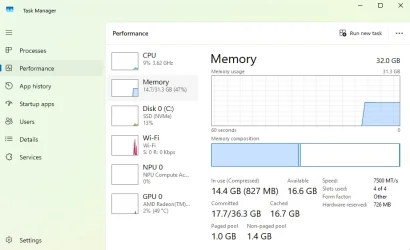
You have two good systems there. What does Task Manager - Performance - Memory shows in use after a restart before you run any programs?

I only have Microsoft Edge open with 4 tabs open, and memory shows 14.4GB in use out of 32GB. In a 16GB system, this provides very little memory to do much:

1777851186566.webp
 

My Computers My Computers

  • At a glance

    Windows 11 ProAMD Ryzen AI 7 350 w/ Radeon 860M 50 TOPS32GB LPDDR5X 7500 MT/sAMD Radeon 860M integrated (shared memory)
    OS
    Windows 11 Pro
    Computer type
    Laptop
    Manufacturer/Model
    Dell 16 Plus DB16255
    CPU
    AMD Ryzen AI 7 350 w/ Radeon 860M 50 TOPS
    Motherboard
    Dell 0PKMHG
    Memory
    32GB LPDDR5X 7500 MT/s
    Graphics Card(s)
    AMD Radeon 860M integrated (shared memory)
    Sound Card
    Stereo speakers (2.5 W x 2 = 5 W total peak)/Realtek SounzReal/Dolby Atmos
    Monitor(s) Displays
    Displays: 16" 1920 x 1200 (Full HD+/WUXGA) 300 nits 60Hz *** Samsung - 27” Odyssey FHD IPS 240Hz G-Sync Gaming Monitor
    Screen Resolution
    1920x1080 @ 60Hz
    Hard Drives
    EG6 KIOXIA 1TB NVME
    Case
    Ice Blue
    Cooling
    "dual-fan" or "enhanced" air-cooling system
    Mouse
    Logitech M650 Wireless/Bluetooth
    Internet Speed
    800/600 Fiber
  • Computer type
    Laptop
Yeah ,I should have known better then to cheap out on the memory. My other machines have 32GB and 64GB of memory. To it's credit that little Surface Laptop is a really snappy machine even with just 16 GB, I just worry about the long term with AI and Recall becoming more invasive as that seems to be the trend now.
I have Recall turned OFF on both computers so I'm not concerned.

I do use Copilot on both machines with no problems.
 

My Computers My Computers

  • At a glance

    Windows 11 ProIntel Series 3 Core Ultra X9 388H64GB LPDDR5x 9600 MT/sIntel Arc graphics B390 Panther Lake
    OS
    Windows 11 Pro
    Computer type
    Laptop
    Manufacturer/Model
    Dell XPS 16 DA16260
    CPU
    Intel Series 3 Core Ultra X9 388H
    Memory
    64GB LPDDR5x 9600 MT/s
    Graphics Card(s)
    Intel Arc graphics B390 Panther Lake
    Monitor(s) Displays
    16" 3.2K Tandem OLED Infinity Edge
    Screen Resolution
    3200 x 2000 16:10 236 PPI
    Hard Drives
    1 Terabyte M.2 PCIe NVMe SSD
    Case
    Black Anodized Aluminum
    Cooling
    Vapor Chamber Cooling
    Mouse
    None
    Internet Speed
    942 Mbps Netgear Mesh + 2 Satellites
    Browser
    Microsoft Edge (Chromium)
    Antivirus
    Windows Security (Defender)
    Other Info
    NPU delivering 67 TOPS
    Microsoft 365 subscription
    Microsoft Office 365
    Microsoft OneDrive 1TB Cloud
    Microsoft Visual Studio
    Microsoft Visual Studio Code
    Microsoft Sysinternals Suite
    Microsoft BitLocker
    Microsoft Copilot
    Dell Support Assist
    Dell Command | Update
    Macrium Reflect X subscription
    1Password Password Manager
    Amazon Kindle for PC
    Lightroom/Photoshop subscription
    Interactive Brokers Trader Workstation
  • At a glance

    Windows 11 ProSnapdragon® X Elite (12 Core) with Hexagon NP...32GB LPDDR5x 8448 MT/sIntegrated Adreno GPU
    Operating System
    Windows 11 Pro
    Computer type
    Laptop
    Manufacturer/Model
    Microsoft Surface Laptop 7
    CPU
    Snapdragon® X Elite (12 Core) with Hexagon NPU delivering 45 TOPS
    Memory
    32GB LPDDR5x 8448 MT/s
    Graphics card(s)
    Integrated Adreno GPU
    Sound Card
    Omnisonic speakers with Dolby Atmos spatial sound
    Monitor(s) Displays
    13.8″ PixelSense Flow touchscreen 120 Hz 600 NIT
    Screen Resolution
    2304 × 1536 (201 PPI), 3:2 aspect ratio
    Hard Drives
    1 TB PCIe NVMe Gen 4 SSD
    Case
    Black Anodized Aluminum
    Cooling
    Vapor Chamber Cooling
    Mouse
    None
    Internet Speed
    942 Mbps Netgear Mesh + 2 Satellites
    Browser
    Microsoft Edge (Chromium)
    Antivirus
    Windows Security (Defender)
    Other Info
    Microsoft 365 subscription (Office)
    Microsoft Office 365
    Microsoft OneDrive 1TB Cloud
    Microsoft Visual Studio 2026
    Microsoft Visual Studio Code
    Interactive Brokers Trader Workstation
    Lightroom/Photoshop subscription
    1Password Password Manager
    Microsoft Sysinternals
    Amazon Kindle for PC
    Microsoft BitLocker
    Microsoft Copilot
Yeah ,I should have known better then to cheap out on the memory. My other machines have 32GB and 64GB of memory. To it's credit that little Surface Laptop is a really snappy machine even with just 16 GB, I just worry about the long term with AI and Recall becoming more invasive as that seems to be the trend now.
It's impossible nowadays to "cheap out" on memory. You can buy less than you need, but cheap doesn't enter the picture! :lmao:
 

My Computers My Computers

  • At a glance

    Win 11 Pro 25H2, Build 26200.8655Intel Core i5 1450064GB DDR4GeForce RTX 4060
    OS
    Win 11 Pro 25H2, Build 26200.8655
    Computer type
    PC/Desktop
    Manufacturer/Model
    Home Brew
    CPU
    Intel Core i5 14500
    Motherboard
    Gigabyte B760M G P WIFI
    Memory
    64GB DDR4
    Graphics Card(s)
    GeForce RTX 4060
    Sound Card
    Chipset Realtek
    Monitor(s) Displays
    LG 45" Ultragear, Acer 24" 1080p
    Screen Resolution
    5120x1440, 1920x1080
    Hard Drives
    Crucial P310 2TB 2280 PCIe Gen4 3D NAND NVMe M.2 SSD (O/S)
    Silicon Power 2TB US75 NVMe PCIe Gen4 M.2 2280 SSD (backup)
    Crucial BX500 2TB 3D NAND (2nd backup)
    Seagate 4TB Ironwolf, rotating HDD archive files
    External off-line backup Drives: 2 NVMe 4TB drives in external enclosures
    PSU
    Thermaltake Toughpower GF3 750W
    Case
    LIAN LI LANCOOL 216 E-ATX PC Case
    Cooling
    Lots of fans!
    Keyboard
    Microsoft Comfort Curve 2000
    Mouse
    Logitech G305
    Internet Speed
    Verizon FiOS 1GB
    Browser
    Firefox
    Antivirus
    Malware Bytes & Windows Defender Security
  • At a glance

    Win 11 Pro 25H2, Build 26200.8524Intel Core i5 1440032GB DDR5Intel 700 Embedded GPU
    Operating System
    Win 11 Pro 25H2, Build 26200.8524
    Computer type
    PC/Desktop
    Manufacturer/Model
    Home Brew
    CPU
    Intel Core i5 14400
    Motherboard
    Gigabyte B760M DS3H AX
    Memory
    32GB DDR5
    Graphics card(s)
    Intel 700 Embedded GPU
    Sound Card
    Realtek Embedded
    Monitor(s) Displays
    27" HP 1080p
    Screen Resolution
    1920x1080
    Hard Drives
    Crucial P310 2TB 2280 PCIe Gen4 eD NAND PCIe SSD
    Samsung EVO 990 2TB NVMe Gen4 SSD
    Samsung 2TB SATA SSD
    PSU
    Thermaltake Smart BM3 650W
    Case
    Okinos Micro ATX Case
    Cooling
    Fans
    Keyboard
    Microsoft Comfort Curve 2000
    Mouse
    Logitech G305
    Internet Speed
    Verizon FiOS 1GB
    Browser
    Firefox
    Antivirus
    Malware Bytes & Windows Defender Security
I've not noticed any memory problems or anything unusual on either System One or System Two.

System Two is an ARM, Microsoft Surface Laptop 7 Snapdragon X Elite.
Just a tip, open your Task Manager to the Details page on the ARM machine and select it's order by memory and see what your top process is and if it's WorkloadsSessionHost.exe. Course you may use Recall but I don't even have it installed let alone enabled and that was my biggest memory user by far.
 

My Computers My Computers

  • At a glance

    Windows 11 25H2Intel Core Ultra 9 275HX (24-Core)64GB DDR5 6400MT/sNVIDIA GeForce RTX 5080 and Intel UHD Graphics
    OS
    Windows 11 25H2
    Computer type
    Laptop
    Manufacturer/Model
    Alienware 18 Area-51
    CPU
    Intel Core Ultra 9 275HX (24-Core)
    Motherboard
    Alienware
    Memory
    64GB DDR5 6400MT/s
    Graphics Card(s)
    NVIDIA GeForce RTX 5080 and Intel UHD Graphics
    Sound Card
    Onboard, Realtek high-performance Audio chips (ALC3329 & ALC1708))
    Monitor(s) Displays
    300HZ 18-inch QHD 500 nit Comfort View+
    Screen Resolution
    2560 x 1600
    Hard Drives
    2TB NVMe M.2 PCIe Gen 5 SSD
    Case
    Magnesium Alloy
    Cooling
    Advanced Cryo-Tech Quad-Fan Cooling system & large vapor chamber
    Keyboard
    Cherry MX ultra low profile mechanical keyboard with per key AlienFX RGB lighting
    Mouse
    Logitech MX Master 4
    Browser
    Vivaldi (main), Firefox, Chrome, Edge
    Antivirus
    MS Defender and Malwarebytes Free
  • At a glance

    Windows 11 25H2Qualcomm Snapdragon X Elite (12 Core) ARM bas...16GB LPDDR5Qualcomm Adreno X1-85
    Operating System
    Windows 11 25H2
    Computer type
    Laptop
    Manufacturer/Model
    Microsoft Surface Laptop 7
    CPU
    Qualcomm Snapdragon X Elite (12 Core) ARM based CPU
    Motherboard
    Microsoft Corp.
    Memory
    16GB LPDDR5
    Graphics card(s)
    Qualcomm Adreno X1-85
    Sound Card
    Omnisonic speakers with Dolby Atmos spatial sound
    Monitor(s) Displays
    120 Hz 13.8-inch 600 nit PixelSense Flow touchscreen
    Screen Resolution
    2304x1536
    Hard Drives
    1TB NVMe Gen 4 SSD
    Case
    Anodized Aluminum
    Cooling
    Traditional active cooling fan system
    Keyboard
    Mechanical QWERTY, backlit when in use
    Mouse
    Logitech MX Master 4 and Surface Arc Mouse
    Browser
    Vivaldi (main), Firefox, Chrome, Edge
    Antivirus
    MS Defender and Malwarebytes Free
I have done nothing to reduce the memory footprint of Windows, and currently I'm using right around 16GB of my 64GB of memory.
 

My Computers My Computers

  • At a glance

    Win 11 Pro 25H2, Build 26200.8655Intel Core i5 1450064GB DDR4GeForce RTX 4060
    OS
    Win 11 Pro 25H2, Build 26200.8655
    Computer type
    PC/Desktop
    Manufacturer/Model
    Home Brew
    CPU
    Intel Core i5 14500
    Motherboard
    Gigabyte B760M G P WIFI
    Memory
    64GB DDR4
    Graphics Card(s)
    GeForce RTX 4060
    Sound Card
    Chipset Realtek
    Monitor(s) Displays
    LG 45" Ultragear, Acer 24" 1080p
    Screen Resolution
    5120x1440, 1920x1080
    Hard Drives
    Crucial P310 2TB 2280 PCIe Gen4 3D NAND NVMe M.2 SSD (O/S)
    Silicon Power 2TB US75 NVMe PCIe Gen4 M.2 2280 SSD (backup)
    Crucial BX500 2TB 3D NAND (2nd backup)
    Seagate 4TB Ironwolf, rotating HDD archive files
    External off-line backup Drives: 2 NVMe 4TB drives in external enclosures
    PSU
    Thermaltake Toughpower GF3 750W
    Case
    LIAN LI LANCOOL 216 E-ATX PC Case
    Cooling
    Lots of fans!
    Keyboard
    Microsoft Comfort Curve 2000
    Mouse
    Logitech G305
    Internet Speed
    Verizon FiOS 1GB
    Browser
    Firefox
    Antivirus
    Malware Bytes & Windows Defender Security
  • At a glance

    Win 11 Pro 25H2, Build 26200.8524Intel Core i5 1440032GB DDR5Intel 700 Embedded GPU
    Operating System
    Win 11 Pro 25H2, Build 26200.8524
    Computer type
    PC/Desktop
    Manufacturer/Model
    Home Brew
    CPU
    Intel Core i5 14400
    Motherboard
    Gigabyte B760M DS3H AX
    Memory
    32GB DDR5
    Graphics card(s)
    Intel 700 Embedded GPU
    Sound Card
    Realtek Embedded
    Monitor(s) Displays
    27" HP 1080p
    Screen Resolution
    1920x1080
    Hard Drives
    Crucial P310 2TB 2280 PCIe Gen4 eD NAND PCIe SSD
    Samsung EVO 990 2TB NVMe Gen4 SSD
    Samsung 2TB SATA SSD
    PSU
    Thermaltake Smart BM3 650W
    Case
    Okinos Micro ATX Case
    Cooling
    Fans
    Keyboard
    Microsoft Comfort Curve 2000
    Mouse
    Logitech G305
    Internet Speed
    Verizon FiOS 1GB
    Browser
    Firefox
    Antivirus
    Malware Bytes & Windows Defender Security
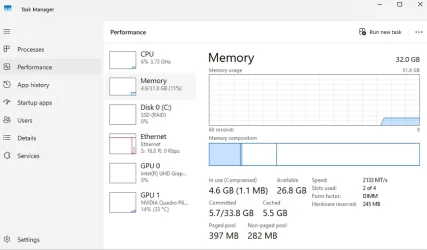
Memory consumption in Windows 11 Pro 25H2 26200.8328 on a non-AI system is far less than what an AI consumes:

1777851453295.webp
 

My Computers My Computers

  • At a glance

    Windows 11 ProAMD Ryzen AI 7 350 w/ Radeon 860M 50 TOPS32GB LPDDR5X 7500 MT/sAMD Radeon 860M integrated (shared memory)
    OS
    Windows 11 Pro
    Computer type
    Laptop
    Manufacturer/Model
    Dell 16 Plus DB16255
    CPU
    AMD Ryzen AI 7 350 w/ Radeon 860M 50 TOPS
    Motherboard
    Dell 0PKMHG
    Memory
    32GB LPDDR5X 7500 MT/s
    Graphics Card(s)
    AMD Radeon 860M integrated (shared memory)
    Sound Card
    Stereo speakers (2.5 W x 2 = 5 W total peak)/Realtek SounzReal/Dolby Atmos
    Monitor(s) Displays
    Displays: 16" 1920 x 1200 (Full HD+/WUXGA) 300 nits 60Hz *** Samsung - 27” Odyssey FHD IPS 240Hz G-Sync Gaming Monitor
    Screen Resolution
    1920x1080 @ 60Hz
    Hard Drives
    EG6 KIOXIA 1TB NVME
    Case
    Ice Blue
    Cooling
    "dual-fan" or "enhanced" air-cooling system
    Mouse
    Logitech M650 Wireless/Bluetooth
    Internet Speed
    800/600 Fiber
  • Computer type
    Laptop
Yes, disabled in Services. I guess I'm more concerned about MS reenabling the feature package in a future build and somehow forcing me to keep the WorkloadsSessionHost.exe enabled and it being an even worse memory hog.
I think I remember seeing Microsoft patched a memory leak in WorkloadsSessionHost about two months ago, but it got quickly corrected. Hopefully Microsoft reduces the memory usage on AI running in Windows 11.
 

My Computers My Computers

  • At a glance

    Windows 11 ProAMD Ryzen AI 7 350 w/ Radeon 860M 50 TOPS32GB LPDDR5X 7500 MT/sAMD Radeon 860M integrated (shared memory)
    OS
    Windows 11 Pro
    Computer type
    Laptop
    Manufacturer/Model
    Dell 16 Plus DB16255
    CPU
    AMD Ryzen AI 7 350 w/ Radeon 860M 50 TOPS
    Motherboard
    Dell 0PKMHG
    Memory
    32GB LPDDR5X 7500 MT/s
    Graphics Card(s)
    AMD Radeon 860M integrated (shared memory)
    Sound Card
    Stereo speakers (2.5 W x 2 = 5 W total peak)/Realtek SounzReal/Dolby Atmos
    Monitor(s) Displays
    Displays: 16" 1920 x 1200 (Full HD+/WUXGA) 300 nits 60Hz *** Samsung - 27” Odyssey FHD IPS 240Hz G-Sync Gaming Monitor
    Screen Resolution
    1920x1080 @ 60Hz
    Hard Drives
    EG6 KIOXIA 1TB NVME
    Case
    Ice Blue
    Cooling
    "dual-fan" or "enhanced" air-cooling system
    Mouse
    Logitech M650 Wireless/Bluetooth
    Internet Speed
    800/600 Fiber
  • Computer type
    Laptop

Latest Support Threads

Back
Top Bottom