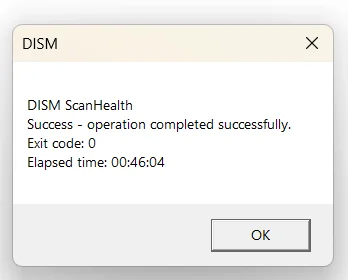
So, a "repair install" doesn't really repair everything, even the Windows files. I confess, I wouldn't have guessed that.
As for the presumption that the "install source" is good, the component store is not the "install source", the ISO or on-line repository is the install source for the repair. It seems pretty lame they didn't insure the integrity of the component store in the repair process, but that does track with all the other lame things that have been happening with Windows lately.

A repair install is simply an in-place upgrade (to the same or roughly same build number as before), so you don't lose your apps and user files.
As with any upgrade, some reg values are not touched because they represent the system's current settings. Sometimes your Windows is broken because certain reg values are corrupted. No repair install will ever correct that, because it's not designed to. A clean install will fix all problems, because you're starting over with a "known good" registry.
In short: Botched updates -> Fixed by repair install. Windows or you messing with reg values -> Fixed by a full restore.
An install image includes a component store, as it includes the WinSxS folders.
DISM repair works off a hierarchy of "hope for the best, but prepare for the worst". Ranking the different sources:
1. Repair Windows from the built-in component store.
2. Repair Windows from a different source (folder or install image source).
3. Repair Windows using an online source provided by WU servers.
4. Re-install Windows as an in-place upgrade using an install image source.
5. Re-install Windows as an in-place upgrade using an online source provide by WU (the new Cloud Rebuild feature in WinRE).
None of this helps if there are bugs in the Servicing Stack (SSU) or how MS prepared the install and update packages.
abbodi1406 has mentioned the 26100 servicing is woefully broken, and he finds inconsistencies all the time because he's always working on tools to integrate updates into install images. When you publish incorrect package metadata, the only way to fix that for users who already installed them is to rewrite DISM to work around these bugs.
For the most part, you're all Don Quixote and tilting at windmills. Because MS has to fix the metadata errors.