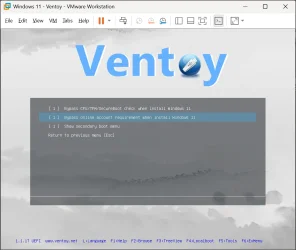
According to Ventoy’s current documentation,
VTOY_WIN11_BYPASS_NRO is enabled by default. You do not need to add an unattended setup file, ventoy.json, or any other file for that default behavior.
Ventoy works quite differently from Rufus. Rufus normally creates a dedicated Windows installation USB from one ISO and can modify/customize that installation media during creation. Ventoy is installed to the USB drive once; afterward, you simply copy one or more unmodified ISO files onto the main Ventoy partition. At boot, Ventoy presents those ISOs in a menu and boots the selected one directly.
For Windows 11, Ventoy has built-in control options. The relevant one is:
VTOY_WIN11_BYPASS_NRO = "1"
Ventoy's documentation explicitly says
the default value is "1" and that, when enabled, Ventoy creates this registry value during Windows installation:
HKEY_LOCAL_MACHINE\SOFTWARE\Microsoft\Windows\CurrentVersion\OOBE\BypassNRO
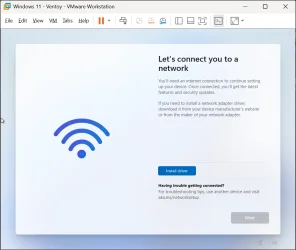
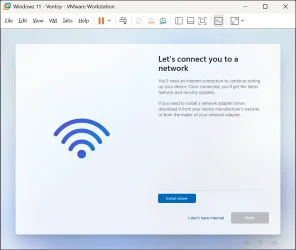
The documentation also says the network must be temporarily disconnected for the local-account option to be offered.
This wasn't always the default. Ventoy added
VTOY_WIN11_BYPASS_NRO in
Ventoy 1.0.86 in December 2022 and, in that same release, explicitly changed both
VTOY_WIN11_BYPASS_NRO and the Windows 11 hardware-check bypass to be enabled by default. The current Ventoy release is 1.1.17, released July 24, 2026, and the current documentation still lists the NRO setting's default as 1.
So, on a normal current Ventoy USB with simply a Windows 11 ISO copied onto it:
Ventoy installed → Windows 11 ISO copied to USB → boot ISO → VTOY_WIN11_BYPASS_NRO is already enabled by default.
No unattend.xml is required for that.
The other user's comment about an unattended setup file refers to a
different Ventoy feature: the Auto Installation plugin. Ventoy can associate an
unattend.xml file with a Windows ISO so that Windows Setup is automated. For that feature, you place the unattended file somewhere on the Ventoy partition and reference it from
/ventoy/ventoy.json. It does
not have to be in the same folder as the ISO; the configuration specifies the full paths to both the ISO and the template.
Likewise,
ventoy.json is only needed when you want to
override or configure Ventoy's defaults. For example, you could explicitly disable the NRO bypass with:
Code:
{
    "control": [
        { "VTOY_WIN11_BYPASS_NRO": "0" }
    ]
}
Without such an override, Ventoy uses its built-in default of
1.
Ventoy also lets you temporarily toggle the option at boot under
F5 Tools → Temporary Control Settings, without creating a
ventoy.json; that change lasts only for that boot.