Solved Other than Macrium, what is your recommendation for a backup/clone software for PC


I once tried Macrium Reflect Free, but found that it has close to zero engineering. To make a backup of your Windows system partition so as to avoid having to do a clean install of Windows which causes all your apps, settings, etc. to be lost e.g. if the internal SSD breaks so it needs to be replaced or if the partition gets so badly corrupted that every attempt to fix it (like doing a repair install of Windows with an in-place upgrade or etc.) doesn't help, Macrium Reflect Free doesn't really add anything useful when compared to merely running the DISM command.

To avoid any and all problems with Acronis, I use only a WinPE-based bootable media of True Image 2021. It's easy to build with the Custom WinPE-based Media Builder community tool. Once built, I simply copied it onto my USB flash drive that I had previously already formatted with Ventoy. After I tested that the bootable media works, I uninstalled True Image from Windows by using the uninstall feature, and I also verified that none of the services from True Image still remained on Windows. They were all gone permanently, and so there no longer was any negative impact on the system performance nor any other type of problems. This was on a very old Intel Core i5-2320 machine w/ 8GB RAM and a 2TB Seagate 3.5″ HDD @ 7200rpm. If you don't believe, you could always decide to back up your Windows system partition with DISM before choosing to install Acronis. It's not exactly rocket science IMO........

To copy files/folders, imaging software is not necessary, and should actually even be avoided IMO because, for that, FastCopy is your friend.
Reflect is very well engineered & supported and it's a doddle to make a reliable backup of all partitions required to recover a Windows installation.
 

My Computer My Computer

At a glance

Windows 11 ProCore i7-13700K64 GB Kingston Fury Beast DDR5Gigabyte GeForce RTX 2060 Super Gaming OC 8G
OS
Windows 11 Pro
Computer type
PC/Desktop
Manufacturer/Model
Self build
CPU
Core i7-13700K
Motherboard
Asus TUF Gaming Plus WiFi Z790
Memory
64 GB Kingston Fury Beast DDR5
Graphics Card(s)
Gigabyte GeForce RTX 2060 Super Gaming OC 8G
Sound Card
Realtek S1200A
Monitor(s) Displays
Viewsonic VP2770 & Dell (secondary)
Screen Resolution
2560 x 1440
Hard Drives
Kingston KC3000 2TB NVME SSD & SATA HDDs & SSD
PSU
EVGA SuperNova G2 850W
Case
Nanoxia Deep Silence 1
Cooling
Noctua NH-D14
Keyboard
Microsoft Digital Media Pro
Mouse
Logitech Wireless
Internet Speed
80 Mb / s
Browser
Chrome
Antivirus
Defender, Malwarebytes Free & AdwCleaner
See if Hasleo has speeded up.

There's also Aomei, which sometimes has a promo for lifetime use.
 

My Computer My Computer

At a glance

Windows 11 Proi5-13400F16 GBRTX 4060
OS
Windows 11 Pro
Computer type
PC/Desktop
Manufacturer/Model
Custom Build
CPU
i5-13400F
Motherboard
Gigabyte B-760M
Memory
16 GB
Graphics Card(s)
RTX 4060
Sound Card
internal
Monitor(s) Displays
AOC 27 gaming
Screen Resolution
1920 x 1080
Hard Drives
Kingston 2 TB M.2
PSU
Thermaltake 700W
Case
DarkFlash C285P
Cooling
Kingsman KA-R240 ARGB Liquid Cooling
Keyboard
Redragon Kala
Mouse
Marvo G945
Internet Speed
400 Mbps DL/UL
Browser
Firefox, Mullvad
Antivirus
Kaspersky Standard
Other Info
Adguard for Desktop, Kerish PC Doctor, PerfectDisk Pro with OptiWrite, AOMEI Backupper Pro, Open-Shell, ExplorerPatcher
Hi folks

All Free software here:

Stand alone bootable version (GUI) of Gparted -- great for cloning or install on any Linux distro rsync (usually included by default) and its GUI Grsync which is pretty good for data backup.

In command line the DD command is pretty good too.

I don't need any paid software for data backup / disk imaging or cloning.

To transfer data to cloud or other remote servers the Free filezilla program (works on Windows too) is pretty good -- uses the sftp:// protocol so decently secure as well.

These days Windows users shouldn't be scared of Linux for dping one or 2 basic tasks -- these days there's loads of "Live distros" which just boot with GUI's even more Windows like than Windows itself so most people would have no trouble using things like a partition manager, the DD command, Grsync etc.

Save yourself a load of dosh -- some Windows software for these functions is either already Paid or even worse subscription software. Even more annoying are the nags to "Go Pro" i.e PAY and if you don't the actual features you want are not in the "free" version.

Some Windows software doesn't even do what it says on the tin -- for example Hasleo says it can restore a current Windows2GO system back to an internal HDD -- (in the paid version) -- this is really fiddly and I|'ve never got it to work -- but all you actually have to do is simply "DD" the Windows2Go system back to your HDD having first made a simple Registry key change.

Simply change the marked key to '0' before cloning back to internal disk.


View attachment 103034


And to copy a running OS to a Windows2Go disk simply DD the disk to the external device and then boot a Windows install disk into command mode ("repair system") and then re-install the boot loader on to the efi partition (bcdboot.exe)

Cheers
jimbo
Do you seriously think the average user would even consider the above.

People who ask what tool to use would not have a clue how to do this!
 

My Computer My Computer

At a glance

Windows 11 Pro + Win11 Canary VM.I9 13th gen i9-13900H 2.60 GHZ16 GB solderedIntegrated Intel Iris XE
OS
Windows 11 Pro + Win11 Canary VM.
Computer type
Laptop
Manufacturer/Model
ASUS Zenbook 14
CPU
I9 13th gen i9-13900H 2.60 GHZ
Motherboard
Yep, Laptop has one.
Memory
16 GB soldered
Graphics Card(s)
Integrated Intel Iris XE
Sound Card
Realtek built in
Monitor(s) Displays
laptop OLED screen
Screen Resolution
2880x1800 touchscreen
Hard Drives
1 TB NVME SSD (only weakness is only one slot)
PSU
Internal + 65W thunderbolt USB4 charger
Case
Yep, got one
Cooling
Stella Artois (UK pint cans - 568 ml) - extra cost.
Keyboard
Built in UK keybd
Mouse
Bluetooth , wireless dongled, wired
Internet Speed
900 mbs (ethernet), wifi 6 typical 350-450 mb/s both up and down
Browser
Edge
Antivirus
Defender
Other Info
TPM 2.0, 2xUSB4 thunderbolt, 1xUsb3 (usb a), 1xUsb-c, hdmi out, 3.5 mm audio out/in combo, ASUS backlit trackpad (inc. switchable number pad)

Macrium Reflect Home V8
Office 365 Family (6 users each 1TB onedrive space)
Hyper-V (a vm runs almost as fast as my older laptop)
See if Hasleo has speeded up.

There's also Aomei, which sometimes has a promo for lifetime use.
Hasleo is as fast as its alternatives.
 

My Computer My Computer

At a glance

Windows 11 Pro + Win11 Canary VM.I9 13th gen i9-13900H 2.60 GHZ16 GB solderedIntegrated Intel Iris XE
OS
Windows 11 Pro + Win11 Canary VM.
Computer type
Laptop
Manufacturer/Model
ASUS Zenbook 14
CPU
I9 13th gen i9-13900H 2.60 GHZ
Motherboard
Yep, Laptop has one.
Memory
16 GB soldered
Graphics Card(s)
Integrated Intel Iris XE
Sound Card
Realtek built in
Monitor(s) Displays
laptop OLED screen
Screen Resolution
2880x1800 touchscreen
Hard Drives
1 TB NVME SSD (only weakness is only one slot)
PSU
Internal + 65W thunderbolt USB4 charger
Case
Yep, got one
Cooling
Stella Artois (UK pint cans - 568 ml) - extra cost.
Keyboard
Built in UK keybd
Mouse
Bluetooth , wireless dongled, wired
Internet Speed
900 mbs (ethernet), wifi 6 typical 350-450 mb/s both up and down
Browser
Edge
Antivirus
Defender
Other Info
TPM 2.0, 2xUSB4 thunderbolt, 1xUsb3 (usb a), 1xUsb-c, hdmi out, 3.5 mm audio out/in combo, ASUS backlit trackpad (inc. switchable number pad)

Macrium Reflect Home V8
Office 365 Family (6 users each 1TB onedrive space)
Hyper-V (a vm runs almost as fast as my older laptop)
Do you seriously think the average user would even consider the above.

People who ask what tool to use would not have a clue how to do this!
People are a lot more savvy these days -- There's no problem using gparted compared to any other partition manager - the GUI is virtually identical to all the other ones. Anybody who can create a bootable usb stick via Rufus (and zillions can do that already) can create the bootable thumb drive.

As for a Windows2Go install -- anybody who can use dism /ApplyImage and bcdboot can create one from scratch easily enough and then simply via an easy reg key can update as and when required and can clone it back to a standard HDD again via a simple reg key. Hardly on a major level of difficulty. Even easier if they just want to clone an existing system to an external device -- again just a simple reg key change and possibly re-apply bcdboot.

I think most typical users would have far more difficulty in sorting out Windows Networking problems or even trying to find and install some specialized hardware drivers.

Cheers
jimbo
 

My Computer My Computer

At a glance

Windows XP,11 Linux Fedora Rawhide pre-releas...2 X Intel i7
OS
Windows XP,11 Linux Fedora Rawhide pre-release 45
Computer type
PC/Desktop
CPU
2 X Intel i7
Screen Resolution
4KUHD X 2
Reflect is very well engineered
Congrats with your magnificent sales pitch. lol It [Macrium Reflect] adds nothing for me. As a matter of fact it doesn't even work reliably for me, for how I use my laptop. Or well, at least it doesn't always. As a result, keeping it installed on my laptop isn't even worth the storage space that it takes up, and the same also holds true about Acronis True Image. IMO both of them become bloat after the bootable media has been built (and tested to verify that the bootable media works). So, I only use the bootable media like I earlier said. In this case actually, well engineered bloat is even worse than just bloat.

Snapshots aren't backups, and, a backup of a Windows system partition (cold image) should not be confounded with a backup that is based on a snaphot of a live Windows system partition (hot image). This is regardless of the fact that the average user can still use them interchangeably without problems, at least under the vast majority of circumstances. But personally, I, like to do all sorts of hobby stuff on Windows that effectively makes that impossible, and, even if this hadn't been the case, I still wouldn't want to rely solely on hot images as the only backups of my Windows system patition. Only the louziest of engineers would choose to solely rely on hot imaging BTW, as there can be hidden factors that add the potential risk of unreliable data having been captured reliably in the backup. This is just a simple old fact. It has all been explained in the official docs from Microsoft a very, very long time ago. But then, a lot of people don't read the docs. Or if they do, they misinterpret them because that's just what the vast majority always do, and people are parrots.

For the average user, the risk will usually be small. But the consequence might not be small. If the majority of people prefer to take the risk, does it mean that that's what everyone should be doing? Enough said...

The reason why I use the bootable media of Acronis rather than the bootable media of Macrium Reflect is pretty simple. The former has several more features and these additional features are incredibly useful to me. As another bonus, the image verification that the former uses (as part of the image creation process itself, that is...) also makes the former more reliable than the latter choice. But I am not going to re-re-re-explain about that particular part of this subject. Not again........
 

My Computers My Computers

  • At a glance

    11 Homei7 13650HX16GB DDR5GeForce RTX 4060 Mobile
    OS
    11 Home
    Computer type
    Laptop
    Manufacturer/Model
    Asus TUF Gaming F16 (2024)
    CPU
    i7 13650HX
    Memory
    16GB DDR5
    Graphics Card(s)
    GeForce RTX 4060 Mobile
    Sound Card
    Eastern Electric MiniMax DAC Supreme; Emotiva UMC-200; Astell & Kern AK240
    Monitor(s) Displays
    Sony Bravia XR-55X90J
    Screen Resolution
    3840×2160
    Hard Drives
    512GB SSD internal
    37TB external
    PSU
    Li-ion
    Cooling
    2× Arc Flow Fans, 4× exhaust vents, 5× heatpipes
    Keyboard
    Logitech K800
    Mouse
    Logitech G402
    Internet Speed
    30Mbit/s up, 500Mbit/s down
    Browser
    FF
    Antivirus
    What's an antivirus?
  • At a glance

    11 Homei5 1135G716GB DDR4Intel Iris Xe
    Operating System
    11 Home
    Computer type
    Laptop
    Manufacturer/Model
    Medion S15450
    CPU
    i5 1135G7
    Memory
    16GB DDR4
    Graphics card(s)
    Intel Iris Xe
    Sound Card
    Eastern Electric MiniMax DAC Supreme; Emotiva UMC-200; Astell & Kern AK240
    Monitor(s) Displays
    Sony Bravia XR-55X90J
    Screen Resolution
    3840×2160
    Hard Drives
    2TB SSD internal
    37TB external
    PSU
    Li-ion
    Keyboard
    Logitech K800
    Mouse
    Logitech G402
    Internet Speed
    30Mbit/s up, 500Mbit/s down
    Browser
    FF
Congrats with your magnificent sales pitch. lol It [Macrium Reflect] adds nothing for me. As a matter of fact it doesn't even work reliably for me, for how I use my laptop. Or well, at least it doesn't always. As a result, keeping it installed on my laptop isn't even worth the storage space that it takes up, and the same also holds true about Acronis True Image. IMO both of them become bloat after the bootable media has been built (and tested to verify that the bootable media works). So, I only use the bootable media like I earlier said. In this case actually, well engineered bloat is even worse than just bloat.

Snapshots aren't backups, and, a backup of a Windows system partition (cold image) should not be confounded with a backup that is based on a snaphot of a live Windows system partition (hot image). This is regardless of the fact that the average user can still use them interchangeably without problems, at least under the vast majority of circumstances. But personally, I, like to do all sorts of hobby stuff on Windows that effectively makes that impossible, and, even if this hadn't been the case, I still wouldn't want to rely solely on hot images as the only backups of my Windows system patition. Only the louziest of engineers would choose to solely rely on hot imaging BTW, as there can be hidden factors that add the potential risk of unreliable data having been captured reliably in the backup. This is just a simple old fact. It has all been explained in the official docs from Microsoft a very, very long time ago. But then, a lot of people don't read the docs. Or if they do, they misinterpret them because that's just what the vast majority always do, and people are parrots.

For the average user, the risk will usually be small. But the consequence might not be small. If the majority of people prefer to take the risk, does it mean that that's what everyone should be doing? Enough said...

The reason why I use the bootable media of Acronis rather than the bootable media of Macrium Reflect is pretty simple. The former has several more features and these additional features are incredibly useful to me. As another bonus, the image verification that the former uses (as part of the image creation process itself, that is...) also makes the former more reliable than the latter choice. But I am not going to re-re-re-explain about that particular part of this subject. Not again........
Best of luck with Acronis software which is poory engineered and supported. I've nver had a problem recovering from a Reflect backup image on vatious PCs.
 

My Computer My Computer

At a glance

Windows 11 ProCore i7-13700K64 GB Kingston Fury Beast DDR5Gigabyte GeForce RTX 2060 Super Gaming OC 8G
OS
Windows 11 Pro
Computer type
PC/Desktop
Manufacturer/Model
Self build
CPU
Core i7-13700K
Motherboard
Asus TUF Gaming Plus WiFi Z790
Memory
64 GB Kingston Fury Beast DDR5
Graphics Card(s)
Gigabyte GeForce RTX 2060 Super Gaming OC 8G
Sound Card
Realtek S1200A
Monitor(s) Displays
Viewsonic VP2770 & Dell (secondary)
Screen Resolution
2560 x 1440
Hard Drives
Kingston KC3000 2TB NVME SSD & SATA HDDs & SSD
PSU
EVGA SuperNova G2 850W
Case
Nanoxia Deep Silence 1
Cooling
Noctua NH-D14
Keyboard
Microsoft Digital Media Pro
Mouse
Logitech Wireless
Internet Speed
80 Mb / s
Browser
Chrome
Antivirus
Defender, Malwarebytes Free & AdwCleaner
...a backup of a Windows system partition (cold image) should not be confounded with a backup that is based on a snaphot of a live Windows system partition (hot image). ... The reason why I use the bootable media of Acronis rather than the bootable media of Macrium Reflect is pretty simple. The former has several more features and these additional features are incredibly useful to me. As another bonus, the image verification that the former uses (as part of the image creation process itself, that is...) also makes the former more reliable than the latter choice.
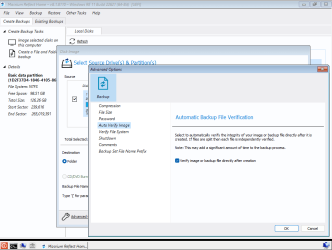
I often make cold images using my Reflect bootable media. That too has image verification as part of the image creation process.

1722945925804.png
 

My Computers My Computers

  • At a glance

    Windows 11 HomeAMD Athlon Silver 3050U8GBRadeon Graphics
    OS
    Windows 11 Home
    Computer type
    Laptop
    Manufacturer/Model
    Acer Aspire 3 A315-23-R9VY
    CPU
    AMD Athlon Silver 3050U
    Memory
    8GB
    Graphics Card(s)
    Radeon Graphics
    Monitor(s) Displays
    laptop screen
    Screen Resolution
    1366x768 native resolution, up to 2560x1440 with Radeon Virtual Super Resolution
    Hard Drives
    1TB Samsung EVO 870 SSD (from April 2026: 250GB EVO 850)
    Internet Speed
    150 Mbps
    Browser
    Edge, Firefox
    Antivirus
    Defender
    Other Info
    fully 'Windows 11 ready' laptop. Windows 10 C: partition migrated from my old unsupported 'main machine' then upgraded to 11. A test migration ran Insider builds for 2 months. When 11 was released on 5th October 2021 it was re-imaged back to 10 and was offered the upgrade in Windows Update on 20th October. Windows Update offered the 22H2 Feature Update on 20th September 2022. It got the 23H2 Feature Update on 4th November 2023 through Windows Update, 24H2 on 3rd October 2024 through Windows Update by setting the Target Release Version for 24H2, and 25H2 on 30th September 2025 through Windows Update by setting the Target Release Version for 25H2.

    UPDATE - 11 April 2026: due to mechanical deterioration this PC has been retired from active duty. The OS with all software and files has been migrated to my System Seven in 'Other systems' to carry on as my general purpose 'main machine'.

    I've now clean installed 25H2 and used Garlin's scripts to update Secure Boot to CA 2023 and revoke the PCA 2011 certificates. It's new role is to test secure boot issues.
  • At a glance

    Windows 11 ProIntel® Core™ i5-520M8GB(integrated graphics) Intel HD Graphics
    Operating System
    Windows 11 Pro
    Computer type
    Laptop
    Manufacturer/Model
    Dell Latitude E4310
    CPU
    Intel® Core™ i5-520M
    Motherboard
    0T6M8G
    Memory
    8GB
    Graphics card(s)
    (integrated graphics) Intel HD Graphics
    Screen Resolution
    1366x768
    Hard Drives
    500GB Crucial MX500 SSD
    Browser
    Firefox, Edge
    Antivirus
    Defender
    Other Info
    unsupported machine: Legacy bios, MBR, TPM 1.2, upgraded from W10 to W11 using W10/W11 hybrid install media workaround.

    In-place upgrade to 22H2 using ISO and a workaround.
    Feature Update to 23H2 by manually installing the Enablement Package.
    In-place upgrade to 24H2 using hybrid 23H2/24H2 install media.
    Upgraded to 25H2 by Enablement Package.

    Also running Insider Dev, and Canary builds and Windows 10 as native boot .vhdx.
  • My SYSTEM THREE is a Dell Latitude 5410, i7-10610U, 32GB RAM, 512GB NVMe ssd, supported device running Windows 11 Pro.

    My SYSTEM FOUR is a 2-in-1 convertible Lenovo Yoga 11e 20DA, Celeron N2930, 8GB RAM, 256GB ssd. Unsupported device: currently running Win10 Pro, plus Win11 Pro RTM and Insider Dev, Beta, and RP 24H2 as native boot vhdx.

    My SYSTEM FIVE is a Dell Latitude 3190 2-in-1, Pentium Silver N5030, 8GB RAM, 1TB NVMe ssd, supported device running Windows 11 Pro, plus Insider Beta, Dev, and Canary builds (and a few others) as a native boot .vhdx.

    My SYSTEM SIX is a Dell Latitude 5550, Core Ultra 7 165H, 64GB RAM, 1TB NVMe SSD, supported device, Windows 11 Pro 24H2, Hyper-V host machine. Updated to 25H2 on 30th September 2025.

    My SYSTEM SEVEN is a Lenovo Thinkpad T580, Intel Core i7-8650U, 16GB RAM, 512GB NVMe SSD + 2nd 512GB NVMe SSD, a supported device for Windows 11. This is my current general purpose 'main machine'. The installed Windows 11 Home from my System One has been migrated to this machine.
Best of luck with Acronis software which is poory engineered and supported.
Luck isn't even a factor, as I simply don't use it. Like I already said multiple times now, I use only the bootable media thereof. If you can't understand the difference, then clearly, you don't have the engineering skills that it takes to be able to judge the quality (or lack thereof).
I've nver had a problem recovering from a Reflect backup image on vatious PCs.
I can say the same exact thing about DISM. But this doesn't also mean that I want to use DISM for making a backup image of my Windows partition each time. Even so, when compared to DISM, Macrium Reflect still adds nothing for me. That's why I call it zero engineering. This isn't an opinion. It isn't a personal preference either. It's just a simple fact, and easy enough to demonstrate also in addition to that.
 

My Computers My Computers

  • At a glance

    11 Homei7 13650HX16GB DDR5GeForce RTX 4060 Mobile
    OS
    11 Home
    Computer type
    Laptop
    Manufacturer/Model
    Asus TUF Gaming F16 (2024)
    CPU
    i7 13650HX
    Memory
    16GB DDR5
    Graphics Card(s)
    GeForce RTX 4060 Mobile
    Sound Card
    Eastern Electric MiniMax DAC Supreme; Emotiva UMC-200; Astell & Kern AK240
    Monitor(s) Displays
    Sony Bravia XR-55X90J
    Screen Resolution
    3840×2160
    Hard Drives
    512GB SSD internal
    37TB external
    PSU
    Li-ion
    Cooling
    2× Arc Flow Fans, 4× exhaust vents, 5× heatpipes
    Keyboard
    Logitech K800
    Mouse
    Logitech G402
    Internet Speed
    30Mbit/s up, 500Mbit/s down
    Browser
    FF
    Antivirus
    What's an antivirus?
  • At a glance

    11 Homei5 1135G716GB DDR4Intel Iris Xe
    Operating System
    11 Home
    Computer type
    Laptop
    Manufacturer/Model
    Medion S15450
    CPU
    i5 1135G7
    Memory
    16GB DDR4
    Graphics card(s)
    Intel Iris Xe
    Sound Card
    Eastern Electric MiniMax DAC Supreme; Emotiva UMC-200; Astell & Kern AK240
    Monitor(s) Displays
    Sony Bravia XR-55X90J
    Screen Resolution
    3840×2160
    Hard Drives
    2TB SSD internal
    37TB external
    PSU
    Li-ion
    Keyboard
    Logitech K800
    Mouse
    Logitech G402
    Internet Speed
    30Mbit/s up, 500Mbit/s down
    Browser
    FF
I once tried Macrium Reflect Free, but found that it has close to zero engineering. To make a backup of your Windows system partition so as to avoid having to do a clean install of Windows which causes all your apps, settings, etc. to be lost e.g. if the internal SSD breaks so it needs to be replaced or if the partition gets so badly corrupted that every attempt to fix it (like doing a repair install of Windows with an in-place upgrade or etc.) doesn't help, Macrium Reflect Free doesn't really add anything useful when compared to merely running the DISM command.

To avoid any and all problems with Acronis, I use only a WinPE-based bootable media of True Image 2021. It's easy to build with the Custom WinPE-based Media Builder community tool. Once built, I simply copied it onto my USB flash drive that I had previously already formatted with Ventoy. After I tested that the bootable media works, I uninstalled True Image from Windows by using the uninstall feature, and I also verified that none of the services from True Image still remained on Windows. They were all gone permanently, and so there no longer was any negative impact on the system performance nor any other type of problems. This was on a very old Intel Core i5-2320 machine w/ 8GB RAM and a 2TB Seagate 3.5″ HDD @ 7200rpm. If you don't believe, you could always decide to back up your Windows system partition with DISM before choosing to install Acronis. It's not exactly rocket science IMO........

To copy files/folders, imaging software is not necessary, and should actually even be avoided IMO because, for that, FastCopy is your friend.
What is the DISM command you use to make an image backup? I think Macrium Reflect will serve anyone well unless they are very familiar with DISM and command prompts!
 

My Computers My Computers

  • At a glance

    Windows 11 Pro 25H2 26200.8894AMD Ryzen 7 5825U with Radeon Graphics16GB
    OS
    Windows 11 Pro 25H2 26200.8894
    Computer type
    Laptop
    Manufacturer/Model
    Acemagic LX15PRO
    CPU
    AMD Ryzen 7 5825U with Radeon Graphics
    Motherboard
    BIOS CT_BI_AMI_LX15PRO_AB8139_A-004
    Memory
    16GB
    Screen Resolution
    1920 x 1080
    Hard Drives
    SSD 2TB
    Internet Speed
    30 Mbps
    Browser
    Brave
    Antivirus
    Webroot SecureAnywhere Complete beta
  • At a glance

    Windows 11 Pro 23H2 22631.2506Atom N450 1.66GHz2GB
    Operating System
    Windows 11 Pro 23H2 22631.2506
    Computer type
    Laptop
    Manufacturer/Model
    HP Mini 210-1090NR PC (bought in late 2009!)
    CPU
    Atom N450 1.66GHz
    Memory
    2GB
    Browser
    Brave
    Antivirus
    Webroot
  • Acer Swift SF114-34 laptop
    OS Windows 11 Pro 26200.8894
    CPU Pentium Silver N6000
    RAM 4GB
    BIOS v1.17
    SSD Samsung 970 EVO Plus SSD 2TB (an upgrade)
Luck isn't even a factor, as I simply don't use it. Like I already said multiple times now, I use only the bootable media thereof. If you can't understand the difference, then clearly, you don't have the engineering skills that it takes to be able to judge the quality (or lack thereof).

I can say the same exact thing about DISM. But this doesn't also mean that I want to use DISM for making a backup image of my Windows partition each time. Even so, when compared to DISM, Macrium Reflect still adds nothing for me. That's why I call it zero engineering. This isn't an opinion. It isn't a personal preference either. It's just a simple fact, and easy enough to demonstrate also in addition to that.
What a snotty post. You said The reason why I use the bootable media of Acronis rather than the bootable media of Macrium Reflect is pretty simple...

Therefore you do depend on Acronis software engineering. If you can't understand what you said then clearly, you lack engineering skills.
 

My Computer My Computer

At a glance

Windows 11 ProCore i7-13700K64 GB Kingston Fury Beast DDR5Gigabyte GeForce RTX 2060 Super Gaming OC 8G
OS
Windows 11 Pro
Computer type
PC/Desktop
Manufacturer/Model
Self build
CPU
Core i7-13700K
Motherboard
Asus TUF Gaming Plus WiFi Z790
Memory
64 GB Kingston Fury Beast DDR5
Graphics Card(s)
Gigabyte GeForce RTX 2060 Super Gaming OC 8G
Sound Card
Realtek S1200A
Monitor(s) Displays
Viewsonic VP2770 & Dell (secondary)
Screen Resolution
2560 x 1440
Hard Drives
Kingston KC3000 2TB NVME SSD & SATA HDDs & SSD
PSU
EVGA SuperNova G2 850W
Case
Nanoxia Deep Silence 1
Cooling
Noctua NH-D14
Keyboard
Microsoft Digital Media Pro
Mouse
Logitech Wireless
Internet Speed
80 Mb / s
Browser
Chrome
Antivirus
Defender, Malwarebytes Free & AdwCleaner
People are a lot more savvy these days -- There's no problem using gparted compared to any other partition manager - the GUI is virtually identical to all the other ones. Anybody who can create a bootable usb stick via Rufus (and zillions can do that already) can create the bootable thumb drive.

As for a Windows2Go install -- anybody who can use dism /ApplyImage and bcdboot can create one from scratch easily enough and then simply via an easy reg key can update as and when required and can clone it back to a standard HDD again via a simple reg key. Hardly on a major level of difficulty. Even easier if they just want to clone an existing system to an external device -- again just a simple reg key change and possibly re-apply bcdboot.

I think most typical users would have far more difficulty in sorting out Windows Networking problems or even trying to find and install some specialized hardware drivers.

Cheers
jimbo
You miss my point - a savvy person would not ask about imaging tools. Digressing about networks is irrelevant to the thread title.
 

My Computer My Computer

At a glance

Windows 11 Pro + Win11 Canary VM.I9 13th gen i9-13900H 2.60 GHZ16 GB solderedIntegrated Intel Iris XE
OS
Windows 11 Pro + Win11 Canary VM.
Computer type
Laptop
Manufacturer/Model
ASUS Zenbook 14
CPU
I9 13th gen i9-13900H 2.60 GHZ
Motherboard
Yep, Laptop has one.
Memory
16 GB soldered
Graphics Card(s)
Integrated Intel Iris XE
Sound Card
Realtek built in
Monitor(s) Displays
laptop OLED screen
Screen Resolution
2880x1800 touchscreen
Hard Drives
1 TB NVME SSD (only weakness is only one slot)
PSU
Internal + 65W thunderbolt USB4 charger
Case
Yep, got one
Cooling
Stella Artois (UK pint cans - 568 ml) - extra cost.
Keyboard
Built in UK keybd
Mouse
Bluetooth , wireless dongled, wired
Internet Speed
900 mbs (ethernet), wifi 6 typical 350-450 mb/s both up and down
Browser
Edge
Antivirus
Defender
Other Info
TPM 2.0, 2xUSB4 thunderbolt, 1xUsb3 (usb a), 1xUsb-c, hdmi out, 3.5 mm audio out/in combo, ASUS backlit trackpad (inc. switchable number pad)

Macrium Reflect Home V8
Office 365 Family (6 users each 1TB onedrive space)
Hyper-V (a vm runs almost as fast as my older laptop)

My Computers My Computers

  • At a glance

    11 Homei7 13650HX16GB DDR5GeForce RTX 4060 Mobile
    OS
    11 Home
    Computer type
    Laptop
    Manufacturer/Model
    Asus TUF Gaming F16 (2024)
    CPU
    i7 13650HX
    Memory
    16GB DDR5
    Graphics Card(s)
    GeForce RTX 4060 Mobile
    Sound Card
    Eastern Electric MiniMax DAC Supreme; Emotiva UMC-200; Astell & Kern AK240
    Monitor(s) Displays
    Sony Bravia XR-55X90J
    Screen Resolution
    3840×2160
    Hard Drives
    512GB SSD internal
    37TB external
    PSU
    Li-ion
    Cooling
    2× Arc Flow Fans, 4× exhaust vents, 5× heatpipes
    Keyboard
    Logitech K800
    Mouse
    Logitech G402
    Internet Speed
    30Mbit/s up, 500Mbit/s down
    Browser
    FF
    Antivirus
    What's an antivirus?
  • At a glance

    11 Homei5 1135G716GB DDR4Intel Iris Xe
    Operating System
    11 Home
    Computer type
    Laptop
    Manufacturer/Model
    Medion S15450
    CPU
    i5 1135G7
    Memory
    16GB DDR4
    Graphics card(s)
    Intel Iris Xe
    Sound Card
    Eastern Electric MiniMax DAC Supreme; Emotiva UMC-200; Astell & Kern AK240
    Monitor(s) Displays
    Sony Bravia XR-55X90J
    Screen Resolution
    3840×2160
    Hard Drives
    2TB SSD internal
    37TB external
    PSU
    Li-ion
    Keyboard
    Logitech K800
    Mouse
    Logitech G402
    Internet Speed
    30Mbit/s up, 500Mbit/s down
    Browser
    FF
I often make cold images using my Reflect bootable media. That too has image verification as part of the image creation process.

View attachment 103293
With the bootable media of Acronis, the verification method performs the same exact operations as when you do a restore with only one difference, which is that the data stored in the newly created image file is not actually written to the source, but is compared to the data already present in the source. AFAIK it is still unclear whether the bootable media of Macrium Reflect uses the same approach to this. But even if I could assume that it does (and that's still only a big IF), then due to the fact that choosing to enable this option adds a significant amount of time to the backup process (like stated in your screenshot), I want to be able to speed it up to compensate, e.g. by not having to waste additional time futzing around in the registry of WinPE each time when I want to specify file/folder exclusions. Or waste additional time as a result of being not allowed to pick a destination folder that will be included in the source. Hopefully this helps to explain what I mean with 'zero engineering'.

Granted, Macrium Reflect has Rapid Delta Restore. But I don't need it, as I only need to do a restore after the SSD breaks or after my Windows partition gets so badly corrupted somehow that... well, I also already explained that particular part of this subject.
 

My Computers My Computers

  • At a glance

    11 Homei7 13650HX16GB DDR5GeForce RTX 4060 Mobile
    OS
    11 Home
    Computer type
    Laptop
    Manufacturer/Model
    Asus TUF Gaming F16 (2024)
    CPU
    i7 13650HX
    Memory
    16GB DDR5
    Graphics Card(s)
    GeForce RTX 4060 Mobile
    Sound Card
    Eastern Electric MiniMax DAC Supreme; Emotiva UMC-200; Astell & Kern AK240
    Monitor(s) Displays
    Sony Bravia XR-55X90J
    Screen Resolution
    3840×2160
    Hard Drives
    512GB SSD internal
    37TB external
    PSU
    Li-ion
    Cooling
    2× Arc Flow Fans, 4× exhaust vents, 5× heatpipes
    Keyboard
    Logitech K800
    Mouse
    Logitech G402
    Internet Speed
    30Mbit/s up, 500Mbit/s down
    Browser
    FF
    Antivirus
    What's an antivirus?
  • At a glance

    11 Homei5 1135G716GB DDR4Intel Iris Xe
    Operating System
    11 Home
    Computer type
    Laptop
    Manufacturer/Model
    Medion S15450
    CPU
    i5 1135G7
    Memory
    16GB DDR4
    Graphics card(s)
    Intel Iris Xe
    Sound Card
    Eastern Electric MiniMax DAC Supreme; Emotiva UMC-200; Astell & Kern AK240
    Monitor(s) Displays
    Sony Bravia XR-55X90J
    Screen Resolution
    3840×2160
    Hard Drives
    2TB SSD internal
    37TB external
    PSU
    Li-ion
    Keyboard
    Logitech K800
    Mouse
    Logitech G402
    Internet Speed
    30Mbit/s up, 500Mbit/s down
    Browser
    FF
What a snotty post.
I lol'd...
You said The reason why I use the bootable media of Acronis rather than the bootable media of Macrium Reflect is pretty simple...

Therefore you do depend on Acronis software engineering. If you can't understand what you said then clearly, you lack engineering skills.
If, after all this snottiness of "Acronis software is poorly engineered" that has alread been repeated multiple dozens of times in this and in other threads on both Elevenforum and Tenforums, you still can't understand why the bootable media of Acronis True Image should not be confounded with Acronis True Image, then no. I do not think my post was snotty, even in the slightest. Much to the contrary, I think my post was truly amazing........
 

My Computers My Computers

  • At a glance

    11 Homei7 13650HX16GB DDR5GeForce RTX 4060 Mobile
    OS
    11 Home
    Computer type
    Laptop
    Manufacturer/Model
    Asus TUF Gaming F16 (2024)
    CPU
    i7 13650HX
    Memory
    16GB DDR5
    Graphics Card(s)
    GeForce RTX 4060 Mobile
    Sound Card
    Eastern Electric MiniMax DAC Supreme; Emotiva UMC-200; Astell & Kern AK240
    Monitor(s) Displays
    Sony Bravia XR-55X90J
    Screen Resolution
    3840×2160
    Hard Drives
    512GB SSD internal
    37TB external
    PSU
    Li-ion
    Cooling
    2× Arc Flow Fans, 4× exhaust vents, 5× heatpipes
    Keyboard
    Logitech K800
    Mouse
    Logitech G402
    Internet Speed
    30Mbit/s up, 500Mbit/s down
    Browser
    FF
    Antivirus
    What's an antivirus?
  • At a glance

    11 Homei5 1135G716GB DDR4Intel Iris Xe
    Operating System
    11 Home
    Computer type
    Laptop
    Manufacturer/Model
    Medion S15450
    CPU
    i5 1135G7
    Memory
    16GB DDR4
    Graphics card(s)
    Intel Iris Xe
    Sound Card
    Eastern Electric MiniMax DAC Supreme; Emotiva UMC-200; Astell & Kern AK240
    Monitor(s) Displays
    Sony Bravia XR-55X90J
    Screen Resolution
    3840×2160
    Hard Drives
    2TB SSD internal
    37TB external
    PSU
    Li-ion
    Keyboard
    Logitech K800
    Mouse
    Logitech G402
    Internet Speed
    30Mbit/s up, 500Mbit/s down
    Browser
    FF
With the bootable media of Acronis, the verification method performs the same exact operations as when you do a restore with only one difference, which is that the data stored in the newly created image file is not actually written to the source, but is compared to the data already present in the source. AFAIK it is still unclear whether the bootable media of Macrium Reflect uses the same approach to this.
Whether it's the boot media creating a cold image, or the installed Reflect creating a live image, verification works the same way. Checksums are calculated as the data is read from the source disk and stored in the image index. Verification reads all the data from the image and calculates the checksums again. If the two match then the data in the image is verified as being identical to the data read from the source disk.

Macrium said:
When an image is created each block of data (generally 64K but may be larger depending on the partition size) has an MD5 hash digest created after it is read from the disk and before it is written to the image file. This hash value is saved in the index of the image file. When the file is read back the hash value is recalculated and compared with the original hash in the index. Any discrepancy between the two values indicates that the image file is corrupt or cannot be read back reliably.
 

My Computers My Computers

  • At a glance

    Windows 11 HomeAMD Athlon Silver 3050U8GBRadeon Graphics
    OS
    Windows 11 Home
    Computer type
    Laptop
    Manufacturer/Model
    Acer Aspire 3 A315-23-R9VY
    CPU
    AMD Athlon Silver 3050U
    Memory
    8GB
    Graphics Card(s)
    Radeon Graphics
    Monitor(s) Displays
    laptop screen
    Screen Resolution
    1366x768 native resolution, up to 2560x1440 with Radeon Virtual Super Resolution
    Hard Drives
    1TB Samsung EVO 870 SSD (from April 2026: 250GB EVO 850)
    Internet Speed
    150 Mbps
    Browser
    Edge, Firefox
    Antivirus
    Defender
    Other Info
    fully 'Windows 11 ready' laptop. Windows 10 C: partition migrated from my old unsupported 'main machine' then upgraded to 11. A test migration ran Insider builds for 2 months. When 11 was released on 5th October 2021 it was re-imaged back to 10 and was offered the upgrade in Windows Update on 20th October. Windows Update offered the 22H2 Feature Update on 20th September 2022. It got the 23H2 Feature Update on 4th November 2023 through Windows Update, 24H2 on 3rd October 2024 through Windows Update by setting the Target Release Version for 24H2, and 25H2 on 30th September 2025 through Windows Update by setting the Target Release Version for 25H2.

    UPDATE - 11 April 2026: due to mechanical deterioration this PC has been retired from active duty. The OS with all software and files has been migrated to my System Seven in 'Other systems' to carry on as my general purpose 'main machine'.

    I've now clean installed 25H2 and used Garlin's scripts to update Secure Boot to CA 2023 and revoke the PCA 2011 certificates. It's new role is to test secure boot issues.
  • At a glance

    Windows 11 ProIntel® Core™ i5-520M8GB(integrated graphics) Intel HD Graphics
    Operating System
    Windows 11 Pro
    Computer type
    Laptop
    Manufacturer/Model
    Dell Latitude E4310
    CPU
    Intel® Core™ i5-520M
    Motherboard
    0T6M8G
    Memory
    8GB
    Graphics card(s)
    (integrated graphics) Intel HD Graphics
    Screen Resolution
    1366x768
    Hard Drives
    500GB Crucial MX500 SSD
    Browser
    Firefox, Edge
    Antivirus
    Defender
    Other Info
    unsupported machine: Legacy bios, MBR, TPM 1.2, upgraded from W10 to W11 using W10/W11 hybrid install media workaround.

    In-place upgrade to 22H2 using ISO and a workaround.
    Feature Update to 23H2 by manually installing the Enablement Package.
    In-place upgrade to 24H2 using hybrid 23H2/24H2 install media.
    Upgraded to 25H2 by Enablement Package.

    Also running Insider Dev, and Canary builds and Windows 10 as native boot .vhdx.
  • My SYSTEM THREE is a Dell Latitude 5410, i7-10610U, 32GB RAM, 512GB NVMe ssd, supported device running Windows 11 Pro.

    My SYSTEM FOUR is a 2-in-1 convertible Lenovo Yoga 11e 20DA, Celeron N2930, 8GB RAM, 256GB ssd. Unsupported device: currently running Win10 Pro, plus Win11 Pro RTM and Insider Dev, Beta, and RP 24H2 as native boot vhdx.

    My SYSTEM FIVE is a Dell Latitude 3190 2-in-1, Pentium Silver N5030, 8GB RAM, 1TB NVMe ssd, supported device running Windows 11 Pro, plus Insider Beta, Dev, and Canary builds (and a few others) as a native boot .vhdx.

    My SYSTEM SIX is a Dell Latitude 5550, Core Ultra 7 165H, 64GB RAM, 1TB NVMe SSD, supported device, Windows 11 Pro 24H2, Hyper-V host machine. Updated to 25H2 on 30th September 2025.

    My SYSTEM SEVEN is a Lenovo Thinkpad T580, Intel Core i7-8650U, 16GB RAM, 512GB NVMe SSD + 2nd 512GB NVMe SSD, a supported device for Windows 11. This is my current general purpose 'main machine'. The installed Windows 11 Home from my System One has been migrated to this machine.
Whether it's the boot media creating a cold image, or the installed Reflect creating a live image, verification works the same way. Checksums are calculated as the data is read from the source disk and stored in the image index. Verification reads all the data from the image and calculates the checksums again. If the two match then the data in the image is verified as being identical to the data read from the source disk.


So, to verify an image immediately after the image file is created, the bootable media of Macrium Reflect uses an inferior verification method. The reason why it is inferior is pretty simple. It ignores the potential risk of read errors that went undetected while the data was being retrieved from the source. Whereas the booatable media of Acronis True Image 1/ addresses this risk and 2/ in addition, makes the difference between this verification process and the actual restore process as small as possible so as to achieve the kind of reliability that is robust. Robustness assures that anticipated challenges under off nominal conditions are addressed, i.e. by expanding reliability specifications to prevent or tolerate known risks.

Before anyone should ask, no, when talking about backup solutions for the average user, robustness is certainly not overkill, as robustness should not be confounded with resilience. (Resilience assures that unanticipated challenges under unexpected conditions are addressed.)
 

My Computers My Computers

  • At a glance

    11 Homei7 13650HX16GB DDR5GeForce RTX 4060 Mobile
    OS
    11 Home
    Computer type
    Laptop
    Manufacturer/Model
    Asus TUF Gaming F16 (2024)
    CPU
    i7 13650HX
    Memory
    16GB DDR5
    Graphics Card(s)
    GeForce RTX 4060 Mobile
    Sound Card
    Eastern Electric MiniMax DAC Supreme; Emotiva UMC-200; Astell & Kern AK240
    Monitor(s) Displays
    Sony Bravia XR-55X90J
    Screen Resolution
    3840×2160
    Hard Drives
    512GB SSD internal
    37TB external
    PSU
    Li-ion
    Cooling
    2× Arc Flow Fans, 4× exhaust vents, 5× heatpipes
    Keyboard
    Logitech K800
    Mouse
    Logitech G402
    Internet Speed
    30Mbit/s up, 500Mbit/s down
    Browser
    FF
    Antivirus
    What's an antivirus?
  • At a glance

    11 Homei5 1135G716GB DDR4Intel Iris Xe
    Operating System
    11 Home
    Computer type
    Laptop
    Manufacturer/Model
    Medion S15450
    CPU
    i5 1135G7
    Memory
    16GB DDR4
    Graphics card(s)
    Intel Iris Xe
    Sound Card
    Eastern Electric MiniMax DAC Supreme; Emotiva UMC-200; Astell & Kern AK240
    Monitor(s) Displays
    Sony Bravia XR-55X90J
    Screen Resolution
    3840×2160
    Hard Drives
    2TB SSD internal
    37TB external
    PSU
    Li-ion
    Keyboard
    Logitech K800
    Mouse
    Logitech G402
    Internet Speed
    30Mbit/s up, 500Mbit/s down
    Browser
    FF
If you're experiencing UNDETECTED READ ERRORS on a System, you have a lot more serious issues going on than just a bit accurate backup can handle.
 

My Computer My Computer

At a glance

Windows 10, Linux MINT (V-guests 7, 11, ZorinOS)Intel Core i7-1070032gB (DDR4)Intel UHD Graphics 630
OS
Windows 10, Linux MINT (V-guests 7, 11, ZorinOS)
Computer type
PC/Desktop
Manufacturer/Model
HP Z2 G5 Workstation
CPU
Intel Core i7-10700
Motherboard
HP Model# 8751
Memory
32gB (DDR4)
Graphics Card(s)
Intel UHD Graphics 630
Sound Card
Realtek basic audio
Monitor(s) Displays
32" (Viewsonic) UHD
Screen Resolution
3840 x 2160
Hard Drives
2-NvME (mainboard), 1-NvME (PCIe), 1-SATA3 SSD
If you're experiencing UNDETECTED READ ERRORS on a System, you have a lot more serious issues going on than just a bit accurate backup can handle.
That in fact is one of the reasons why, when compared to that of the bootable media of Macrium Reflect, the verification method, or mechanism that the bootable media of Acronis True Image uses for this purpose is superior by design. It's to effectively mitigate the potential risk of "a lot more serious issues" going undetected until it is already too late. The chance of a read error going twice undetected is very small. So, the data is read twice from the source (one time to be able to write it to the image file that is being created, one time to be able to verify that the data read from the image file that has been created matches the data read from the source in such a way that is still not entirely bulletproof, but that nevertheless does meet the criteria of being robust).
 

My Computers My Computers

  • At a glance

    11 Homei7 13650HX16GB DDR5GeForce RTX 4060 Mobile
    OS
    11 Home
    Computer type
    Laptop
    Manufacturer/Model
    Asus TUF Gaming F16 (2024)
    CPU
    i7 13650HX
    Memory
    16GB DDR5
    Graphics Card(s)
    GeForce RTX 4060 Mobile
    Sound Card
    Eastern Electric MiniMax DAC Supreme; Emotiva UMC-200; Astell & Kern AK240
    Monitor(s) Displays
    Sony Bravia XR-55X90J
    Screen Resolution
    3840×2160
    Hard Drives
    512GB SSD internal
    37TB external
    PSU
    Li-ion
    Cooling
    2× Arc Flow Fans, 4× exhaust vents, 5× heatpipes
    Keyboard
    Logitech K800
    Mouse
    Logitech G402
    Internet Speed
    30Mbit/s up, 500Mbit/s down
    Browser
    FF
    Antivirus
    What's an antivirus?
  • At a glance

    11 Homei5 1135G716GB DDR4Intel Iris Xe
    Operating System
    11 Home
    Computer type
    Laptop
    Manufacturer/Model
    Medion S15450
    CPU
    i5 1135G7
    Memory
    16GB DDR4
    Graphics card(s)
    Intel Iris Xe
    Sound Card
    Eastern Electric MiniMax DAC Supreme; Emotiva UMC-200; Astell & Kern AK240
    Monitor(s) Displays
    Sony Bravia XR-55X90J
    Screen Resolution
    3840×2160
    Hard Drives
    2TB SSD internal
    37TB external
    PSU
    Li-ion
    Keyboard
    Logitech K800
    Mouse
    Logitech G402
    Internet Speed
    30Mbit/s up, 500Mbit/s down
    Browser
    FF
On any System experiencing "undetected" READ ERRORS, by the time you off-line image your System with the "robust" method you describe above, the DATA being imaged is almost sure to be trashed before the image is even executed. Just think of all those corrupted (non-error detected) DATA changes being changed by apps and rewritten back to the System in an error free state... worthless DATA at this point no matter what type of imaging verification method is used.

In relation to undetected READ ERRORS, the above discussion seems pointless.
 

My Computer My Computer

At a glance

Windows 10, Linux MINT (V-guests 7, 11, ZorinOS)Intel Core i7-1070032gB (DDR4)Intel UHD Graphics 630
OS
Windows 10, Linux MINT (V-guests 7, 11, ZorinOS)
Computer type
PC/Desktop
Manufacturer/Model
HP Z2 G5 Workstation
CPU
Intel Core i7-10700
Motherboard
HP Model# 8751
Memory
32gB (DDR4)
Graphics Card(s)
Intel UHD Graphics 630
Sound Card
Realtek basic audio
Monitor(s) Displays
32" (Viewsonic) UHD
Screen Resolution
3840 x 2160
Hard Drives
2-NvME (mainboard), 1-NvME (PCIe), 1-SATA3 SSD

Latest Support Threads

Back
Top Bottom