[Pseudo-rant] Windows Update will keep your drivers updated (or not)


eLPuSHeR

Well-known member
Member
VIP
Local time
1:57 PM
Posts
47
OS
Windows 11 25H2
Good day.

Before anyone tell me the best aproach for updating drivers is to go to manufacturer's page, which is perfectly fine on most cases, but not entirely true on systems that "can" run Windows 11 but aren't supported on manufacturer's page beyond windows 10 (your mileage may vary), I have noticed that Windows install a lot of very old drivers upon clean installing. Those drivers seem to never get updated even if you copy the hardware id and paste it into the microsoft catalog (catalog.update.microsoft.com). I have downloaded newer and working versions from there, for several device drivers. I have noticed that with MS built-in drivers at installation my current intel board shuts down every now and then; but it's fine with updated drivers. Why WU don't give you the option to update those drivers if they seem to work just fine?
 

My Computer My Computer

At a glance

Windows 11 25H2i7 7700k16 GB DDR4nVidia GeForce GTX1070 (Pascal)
OS
Windows 11 25H2
Computer type
PC/Desktop
Manufacturer/Model
MSI
CPU
i7 7700k
Motherboard
B250 Bazooka (MS-7A70)
Memory
16 GB DDR4
Graphics Card(s)
nVidia GeForce GTX1070 (Pascal)
Sound Card
Realtek HDA (ALC887)
Monitor(s) Displays
ASUS VG278QR 1920x1080 165Hz 5ms
Screen Resolution
FullHD
Hard Drives
SSD NVMe + Hardisk SATA III
Case
Aerocool
Cooling
Air regular one
Keyboard
Logitech G213
Mouse
Logitech G203 Prodigy
Internet Speed
600Mb/s
Browser
Firefox
Antivirus
Microsoft Defender
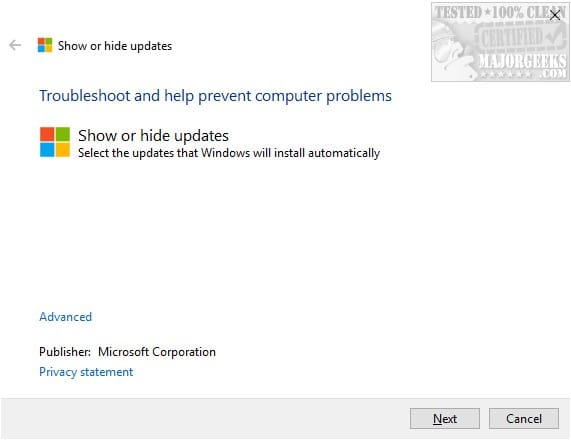
First of all, always prefer official OEM drivers if available. They are more compatible, have better performance and gives you access to all device features, unlike WU drivers which are basic functionality. If there is no Windows 10/11 driver (they are the same), use Windows 8/8.1 64-bit or 7 64-bit. Even Vista 64-bit for very old hardware works, but the newer the better. The exception is Intel graphics drivers for Windows 7 which are locked by Intel to refuse installing on higher Windows versions. If there is a newer WU driver, but you rather keep your older official OEM driver, you can block the respective update using the Microsoft Windows Update Show/Hide Tool or the Windows Automatic Updates Manager (WAU Manager), both available from Major Geeks.


My Computers My Computers

  • At a glance

    Windows 11 Pro 23H2 (5699), 25H2 (8737)Mobile DualCore Intel Core 2 Duo T7250, 2000 MHz4GBMobile Intel(R) GMA 4500M (Mobile 4 series)
    OS
    Windows 11 Pro 23H2 (5699), 25H2 (8737)
    Computer type
    Laptop
    Manufacturer/Model
    Acer Extensa 5630EZ
    CPU
    Mobile DualCore Intel Core 2 Duo T7250, 2000 MHz
    Motherboard
    Acer Extensa 5630
    Memory
    4GB
    Graphics Card(s)
    Mobile Intel(R) GMA 4500M (Mobile 4 series)
    Sound Card
    Realtek ALC268 @ Intel 82801IB ICH9 - High Definition Audio Controller
    Monitor(s) Displays
    1
    Screen Resolution
    1280x800
    Hard Drives
    Samsung SSD 850 EVO 250GB SATA Device (250 GB, SATA-III)
    Internet Speed
    VDSL 50 Mbps
    Browser
    MICROSOFT EDGE
    Antivirus
    WINDOWS DEFENDER
    Other Info
    Legacy MBR installation, no TPM, no Secure Boot, no WDDM 2.0 graphics drivers, no SSE4.2, cannot get more unsupported ;) This is only my test laptop. I had installed Windows 11 here before upgrading my main PC. For my main PC I use everyday see my 2nd system specs.
  • At a glance

    Windows 11 Pro v25H2 (build 26200.8737)Intel Core-i7 3770 3.40GHz s1155 (3rd generat...2x Kingston Hyper-X Blu 8GB DDR3-1600GIGABYTE GeForce RTX 3050 WINDFORCE OC V2 6GB...
    Operating System
    Windows 11 Pro v25H2 (build 26200.8737)
    Computer type
    PC/Desktop
    Manufacturer/Model
    Custom-built PC
    CPU
    Intel Core-i7 3770 3.40GHz s1155 (3rd generation)
    Motherboard
    Asus P8H61 s1155 ATX
    Memory
    2x Kingston Hyper-X Blu 8GB DDR3-1600
    Graphics card(s)
    GIGABYTE GeForce RTX 3050 WINDFORCE OC V2 6GB (GV-N3050WF2OCV2-6GD)
    Sound Card
    Realtek HD audio (ALC887)
    Monitor(s) Displays
    Sony Bravia KDL-19L4000 19" LCD TV via VGA
    Screen Resolution
    1440x900 32-bit 60Hz
    Hard Drives
    WD Blue SA510 2.5 1000GB SSD as system disk, Western Digital Caviar Purple 4TB SATA III (WD40PURZ) as second
    PSU
    Thermaltake Litepower RGB 550W Full Wired
    Case
    SUPERCASE MIDI-TOWER
    Cooling
    Deepcool Gamma Archer CPU cooler, 1x 8cm fan at the back
    Keyboard
    Mitsumi 101-key PS/2
    Mouse
    Sunnyline OptiEye PS/2
    Internet Speed
    100Mbps
    Browser
    Microsoft Edge, Mozilla Firefox
    Antivirus
    Microsoft Windows Defender
    Other Info
    Legacy BIOS (MBR) installation, no TPM, no Secure Boot, WDDM 3.0 graphics drivers, WEI score 7.4
I will keep that in mind. Thanks.
 

My Computer My Computer

At a glance

Windows 11 25H2i7 7700k16 GB DDR4nVidia GeForce GTX1070 (Pascal)
OS
Windows 11 25H2
Computer type
PC/Desktop
Manufacturer/Model
MSI
CPU
i7 7700k
Motherboard
B250 Bazooka (MS-7A70)
Memory
16 GB DDR4
Graphics Card(s)
nVidia GeForce GTX1070 (Pascal)
Sound Card
Realtek HDA (ALC887)
Monitor(s) Displays
ASUS VG278QR 1920x1080 165Hz 5ms
Screen Resolution
FullHD
Hard Drives
SSD NVMe + Hardisk SATA III
Case
Aerocool
Cooling
Air regular one
Keyboard
Logitech G213
Mouse
Logitech G203 Prodigy
Internet Speed
600Mb/s
Browser
Firefox
Antivirus
Microsoft Defender
First of all, always prefer official OEM drivers if available.
I totally agree. However, over the last couple of weeks, I've received quite a lot of Intel driver updates, via Windows Update, relating specifically to my device, that I wouldn't necessarily have received directly (?) from Dell / Intel.
 

My Computer My Computer

At a glance

Windows 11 Pro 25H2 (Build 26200.8737)Intel Core Ultra 9 285 5.6 GHz32.00 GBIntel Integrated Graphics (128 MB)
OS
Windows 11 Pro 25H2 (Build 26200.8737)
Computer type
PC/Desktop
Manufacturer/Model
Dell Pro Max Tower T2 FCT2250
CPU
Intel Core Ultra 9 285 5.6 GHz
Motherboard
64-bit operating system, x64-based processor
Memory
32.00 GB
Graphics Card(s)
Intel Integrated Graphics (128 MB)
Sound Card
Realtek Audio
Monitor(s) Displays
Dell P2714H Monitor
Screen Resolution
1920 x 1080
Hard Drives
1 x 512GB M.2 XG10d SED KIOXIA PCIe solid state drive (Internal)
1 x 2TB Seagate ST2000DM008-2UB102 HDD (Internal)
1 x 4TB Seagate STGX4000400 External HDD
1 x 6TB WD Elements AE 2689 External HDD
PSU
500 Watts
Cooling
Air
Keyboard
Microsoft Wired Keyboard 600
Mouse
Microsoft USB Basic Optical Mouse v2.0
Browser
Firefox
Antivirus
Windows Defender + Malwarebytes Premium
Other Info
BaseBoard Manufacturer Dell Inc.
BaseBoard Product 022RY57
BaseBoard Version A01
These are usually Intel chipset drivers. If you install the latest Intel chipset driver (that supports your own chipset) they should be installed. However, Intel has disappeared almost all chipset drivers from their site, except the latest that support only newest chipset. Your best bet is to download it from the motherboard (computer) manufacturer or just let Windows Update install them. Usually you won't notice any difference if you don't install them. Rarely they provide new features. That said, one of these drivers might be an UEFI firmware (aka BIOS) update. Again, I would rather download it directly from the manufacturer. Recently I was upgrading Windows on my wife's HP laptop and tried to upgrade the UEFI firmware via Windows Update. For some unknown reason it failed at the last stage, but fortunately the old version was restored automatically and the laptop wasn't damaged. I then downloaded the same update directly from HP and it was installed successfully.
 

My Computers My Computers

  • At a glance

    Windows 11 Pro 23H2 (5699), 25H2 (8737)Mobile DualCore Intel Core 2 Duo T7250, 2000 MHz4GBMobile Intel(R) GMA 4500M (Mobile 4 series)
    OS
    Windows 11 Pro 23H2 (5699), 25H2 (8737)
    Computer type
    Laptop
    Manufacturer/Model
    Acer Extensa 5630EZ
    CPU
    Mobile DualCore Intel Core 2 Duo T7250, 2000 MHz
    Motherboard
    Acer Extensa 5630
    Memory
    4GB
    Graphics Card(s)
    Mobile Intel(R) GMA 4500M (Mobile 4 series)
    Sound Card
    Realtek ALC268 @ Intel 82801IB ICH9 - High Definition Audio Controller
    Monitor(s) Displays
    1
    Screen Resolution
    1280x800
    Hard Drives
    Samsung SSD 850 EVO 250GB SATA Device (250 GB, SATA-III)
    Internet Speed
    VDSL 50 Mbps
    Browser
    MICROSOFT EDGE
    Antivirus
    WINDOWS DEFENDER
    Other Info
    Legacy MBR installation, no TPM, no Secure Boot, no WDDM 2.0 graphics drivers, no SSE4.2, cannot get more unsupported ;) This is only my test laptop. I had installed Windows 11 here before upgrading my main PC. For my main PC I use everyday see my 2nd system specs.
  • At a glance

    Windows 11 Pro v25H2 (build 26200.8737)Intel Core-i7 3770 3.40GHz s1155 (3rd generat...2x Kingston Hyper-X Blu 8GB DDR3-1600GIGABYTE GeForce RTX 3050 WINDFORCE OC V2 6GB...
    Operating System
    Windows 11 Pro v25H2 (build 26200.8737)
    Computer type
    PC/Desktop
    Manufacturer/Model
    Custom-built PC
    CPU
    Intel Core-i7 3770 3.40GHz s1155 (3rd generation)
    Motherboard
    Asus P8H61 s1155 ATX
    Memory
    2x Kingston Hyper-X Blu 8GB DDR3-1600
    Graphics card(s)
    GIGABYTE GeForce RTX 3050 WINDFORCE OC V2 6GB (GV-N3050WF2OCV2-6GD)
    Sound Card
    Realtek HD audio (ALC887)
    Monitor(s) Displays
    Sony Bravia KDL-19L4000 19" LCD TV via VGA
    Screen Resolution
    1440x900 32-bit 60Hz
    Hard Drives
    WD Blue SA510 2.5 1000GB SSD as system disk, Western Digital Caviar Purple 4TB SATA III (WD40PURZ) as second
    PSU
    Thermaltake Litepower RGB 550W Full Wired
    Case
    SUPERCASE MIDI-TOWER
    Cooling
    Deepcool Gamma Archer CPU cooler, 1x 8cm fan at the back
    Keyboard
    Mitsumi 101-key PS/2
    Mouse
    Sunnyline OptiEye PS/2
    Internet Speed
    100Mbps
    Browser
    Microsoft Edge, Mozilla Firefox
    Antivirus
    Microsoft Windows Defender
    Other Info
    Legacy BIOS (MBR) installation, no TPM, no Secure Boot, WDDM 3.0 graphics drivers, WEI score 7.4
Your question cannot be answered because some manufacturers choose not to put some Drivers/Firmware updates with MS, therefore they have to come from the MOBO/PC/Laptop OEM manufacturer.

On my 3 year old Lenovo Laptop, most of the Lenovo drivers currently come from MS Updates with 2 exceptions, UEFI/BIOS, VBIOS which came from Lenovo updates, the UEFI/BIOS from their Vantage App, VBIOS directly from the list of drivers given by inputting the serial number.

Over the last 8 months every one has come via Windows updates 11 of them from MS, Lenovo, Samsung. Before that from memory - Intel, Micron, Sonix, WD, Realtek, Nahimic/Elevoc.

Obviously with the modular design of a Desktop PC there will be more OEM manufacturer drivers involved if you have added PCI-E Cards or whatever.

So there is no one answer.

"I have noticed that with MS built-in drivers at installation my current intel board shuts down every now and then; but it's fine with updated drivers."

Think about it, why do a so-called clean install ... just making work for yourself.
 

My Computer My Computer

At a glance

Windows 11
OS
Windows 11
The reply is because Windows Update might not match the hardware IDs exactly. This is because they usually upload a generic driver that it supports several devices of the same family. However, your device IDs might not be on the list, so WU doesn't offer the generic driver for you. Like I said before, these drivers are core-functionality. Microsoft wants to make your device work, they don't care if the generic driver doesn't take advantage of all your device features. Most novice users won't even notice the difference anyway. For example, generic graphics drivers just display graphics on screen. They don't include the HDMI audio component, they don't include any optional software such as nVidia Control Panel, so the user cannot tweak performance or improve image appearance. It just works with the default settings which most know hardly are ideal. Many older graphics cards support only standard resolutions (800x600, 1024x768, 1280x1024, 1280x720), so they look bad on a non-standard monitor such as 1366x768. To make them display at native monitor resolution and get a much better image, you have to install the official OEM graphics drivers. Another example is that a generic printer driver just prints on plain paper (no other choice), color or B&W and in draft or normal quality. The official OEM model-specific printer driver supports many special papers (plain, inkjet, transparencies, photo papers, iron sticker papers, envelopes), many print qualities, dual side printing, watermarks, cover pages, printer maintenance and more. I think you get the idea. Similarly for other device types. The rule is WU driver is basic functionality, the official OEM driver provides access to all features and has much better performance. Everything else is the exception, not the rule.

Therefore, always search for official OEM drivers first. Yes, if you have components from many manufacturers you must visit each support site separately. If you cannot find OEM drivers, or you don't have the time to do it, then use the manufacturer's updater, if available. Next solution is to use Windows Update and the last resort, if there is some weird device you cannot find drivers for and Windows Update also cannot install drivers, use a driver tool such as Snappy Driver Installer. Like I said, the driver tool should be the last resort, not the easy solution for lazy users. Because if you touch the chipset drivers with Snappy it might give you a BSOD. Also if used on a touch device you might lose the touch function. If you decide to use it, at least install only the missing drivers (green text on the list), avoid updating existing drivers (blue text on the list), especially if you suspect they are for motherboard components (aka chipset drivers) to minimize risk of incompatibilities and BSOD. Needless to say NEVER upgrade the UEFI firmware (aka BIOS) using any third-party tool! You either do it manually (recommended), or use the manufacturer updater or use Windows Update (I would not do that). NEVER any driver tool for BIOS upgrades! Flashing the wrong BIOS or failing to complete and your motherboard won't work again!
 
Last edited:

My Computers My Computers

  • At a glance

    Windows 11 Pro 23H2 (5699), 25H2 (8737)Mobile DualCore Intel Core 2 Duo T7250, 2000 MHz4GBMobile Intel(R) GMA 4500M (Mobile 4 series)
    OS
    Windows 11 Pro 23H2 (5699), 25H2 (8737)
    Computer type
    Laptop
    Manufacturer/Model
    Acer Extensa 5630EZ
    CPU
    Mobile DualCore Intel Core 2 Duo T7250, 2000 MHz
    Motherboard
    Acer Extensa 5630
    Memory
    4GB
    Graphics Card(s)
    Mobile Intel(R) GMA 4500M (Mobile 4 series)
    Sound Card
    Realtek ALC268 @ Intel 82801IB ICH9 - High Definition Audio Controller
    Monitor(s) Displays
    1
    Screen Resolution
    1280x800
    Hard Drives
    Samsung SSD 850 EVO 250GB SATA Device (250 GB, SATA-III)
    Internet Speed
    VDSL 50 Mbps
    Browser
    MICROSOFT EDGE
    Antivirus
    WINDOWS DEFENDER
    Other Info
    Legacy MBR installation, no TPM, no Secure Boot, no WDDM 2.0 graphics drivers, no SSE4.2, cannot get more unsupported ;) This is only my test laptop. I had installed Windows 11 here before upgrading my main PC. For my main PC I use everyday see my 2nd system specs.
  • At a glance

    Windows 11 Pro v25H2 (build 26200.8737)Intel Core-i7 3770 3.40GHz s1155 (3rd generat...2x Kingston Hyper-X Blu 8GB DDR3-1600GIGABYTE GeForce RTX 3050 WINDFORCE OC V2 6GB...
    Operating System
    Windows 11 Pro v25H2 (build 26200.8737)
    Computer type
    PC/Desktop
    Manufacturer/Model
    Custom-built PC
    CPU
    Intel Core-i7 3770 3.40GHz s1155 (3rd generation)
    Motherboard
    Asus P8H61 s1155 ATX
    Memory
    2x Kingston Hyper-X Blu 8GB DDR3-1600
    Graphics card(s)
    GIGABYTE GeForce RTX 3050 WINDFORCE OC V2 6GB (GV-N3050WF2OCV2-6GD)
    Sound Card
    Realtek HD audio (ALC887)
    Monitor(s) Displays
    Sony Bravia KDL-19L4000 19" LCD TV via VGA
    Screen Resolution
    1440x900 32-bit 60Hz
    Hard Drives
    WD Blue SA510 2.5 1000GB SSD as system disk, Western Digital Caviar Purple 4TB SATA III (WD40PURZ) as second
    PSU
    Thermaltake Litepower RGB 550W Full Wired
    Case
    SUPERCASE MIDI-TOWER
    Cooling
    Deepcool Gamma Archer CPU cooler, 1x 8cm fan at the back
    Keyboard
    Mitsumi 101-key PS/2
    Mouse
    Sunnyline OptiEye PS/2
    Internet Speed
    100Mbps
    Browser
    Microsoft Edge, Mozilla Firefox
    Antivirus
    Microsoft Windows Defender
    Other Info
    Legacy BIOS (MBR) installation, no TPM, no Secure Boot, WDDM 3.0 graphics drivers, WEI score 7.4

Latest Support Threads

Back
Top Bottom