Future Updates
I'd like to share a preview of what I'm currently working on for
Universal Intel Chipset Device Updater , along with another open-source project currently under development.
Universal Intel Chipset Device Updater.
The next major release will introduce two new features:
- -download (-dl)
- -offline (-o)
-download (-dl)
The
-download option is intended for users who simply want to obtain the latest official Intel Chipset Device Software installer without performing an installation.
The updater will:
- Detect your Intel platform.
- Identify the correct chipset package.
- Download the latest official Intel installer available for your platform.
- Save it directly to your Downloads folder.
This will be especially useful for owners of legacy Intel platforms, where Intel no longer releases new chipset packages. You'll always be able to download the final official installer available for your platform, compatible with Windows 10, Windows 11 and, most likely, future Windows versions as well. No installation is performed. The updater simply downloads the correct official package.
-offline (-o)
The
-offline feature is a much more ambitious project. Its goal is to build a complete offline Intel chipset INF installer entirely on your own PC, similar in concept to how UUP Dump creates the latest Windows installation media. The process is considerably more complex than downloading a single installer. Each Intel chipset package contains INF files for dozens of Intel platforms, but
no single installer contains the newest INF files for every supported Intel device. To solve this, my database generation scripts analyse every Intel chipset release and determine the minimum set of installer packages required to reconstruct the latest complete INF repository. At the time of writing, this requires
19 different Intel chipset installer versions.
The updater will then:
- Download every required official Intel installer.
- Extract only the INF and CAT files.
- Process every package from the oldest release to the newest.
- Automatically replace older INF files with newer revisions whenever they exist.
- Download the latest platform-specific INF packages from the Microsoft Update Catalog when Intel distributes them only as MSI installers.
- Merge everything into a single offline repository.
- Generate an installation script.
- Package everything into a standalone archive saved in your Downloads folder.
The end result is a single offline installer containing the newest available INF files for every supported Intel hardware ID across all chipset generations. Everything is generated locally on your own computer when you run the command. I have no plans to distribute pre-built offline packages. Every file is downloaded directly from Intel or Microsoft, making this the cleanest, most transparent and legally sound solution while ensuring that every offline package is built from the latest officially available files. I also recommend rebuilding the offline package periodically (for example once per month) so it always contains the newest chipset INF releases.
Another Open-Source Project
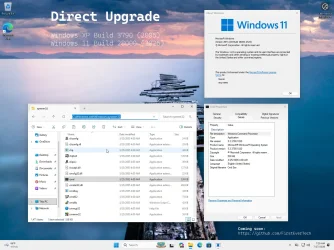
I'm also testing another open-source project, this time focused on Windows 11.
The goal is to perform a direct in-place upgrade from
Windows 7 x64 (build 7600) to the latest
Windows 11 26H1 (build 28000) release.
Key features include:
- Direct in-place upgrade from Windows 7.
- No TPM 2.0 requirement.
- No Secure Boot requirement.
- Support for otherwise unsupported hardware.
- Upgrade directly to the latest Windows 11 26H1 release.
Testing has already been successful, including upgrades starting from the original Windows 7 RTM (Build 7600).
Out of curiosity, I also experimented with something much more extreme:
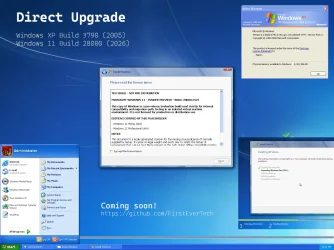
- Windows Vista (64-bit) → Windows 11 (26H1)
- Windows XP (64-bit) → Windows 11 (26H1)
Surprisingly, I managed to get both operating systems through the first phase of Windows Setup. Unfortunately, after the first reboot the installation fails due to compatibility issues. While it's an interesting technical challenge, that's probably a little too hardcore even for me.
For now, the project's official target remains
Windows 7 x64 and newer. I don't think even Microsoft expected that it would one day be possible to upgrade
Windows 7 from 2009 directly to the latest
Windows 11 from 2026.



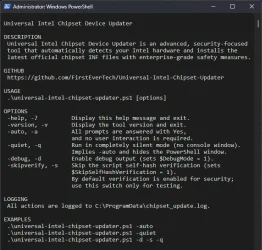
 Release: v2026.05.0014
 What's New
 Release Files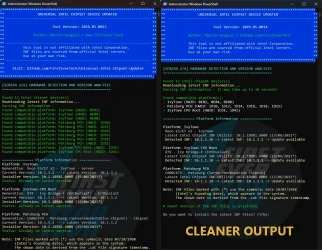



 <
<